
This Far-Right Movement Is Highjacking Local Churches
July 30, 2025
Local faith leaders are fighting back, refusing to let the Bible and the church be hijacked by extremists.
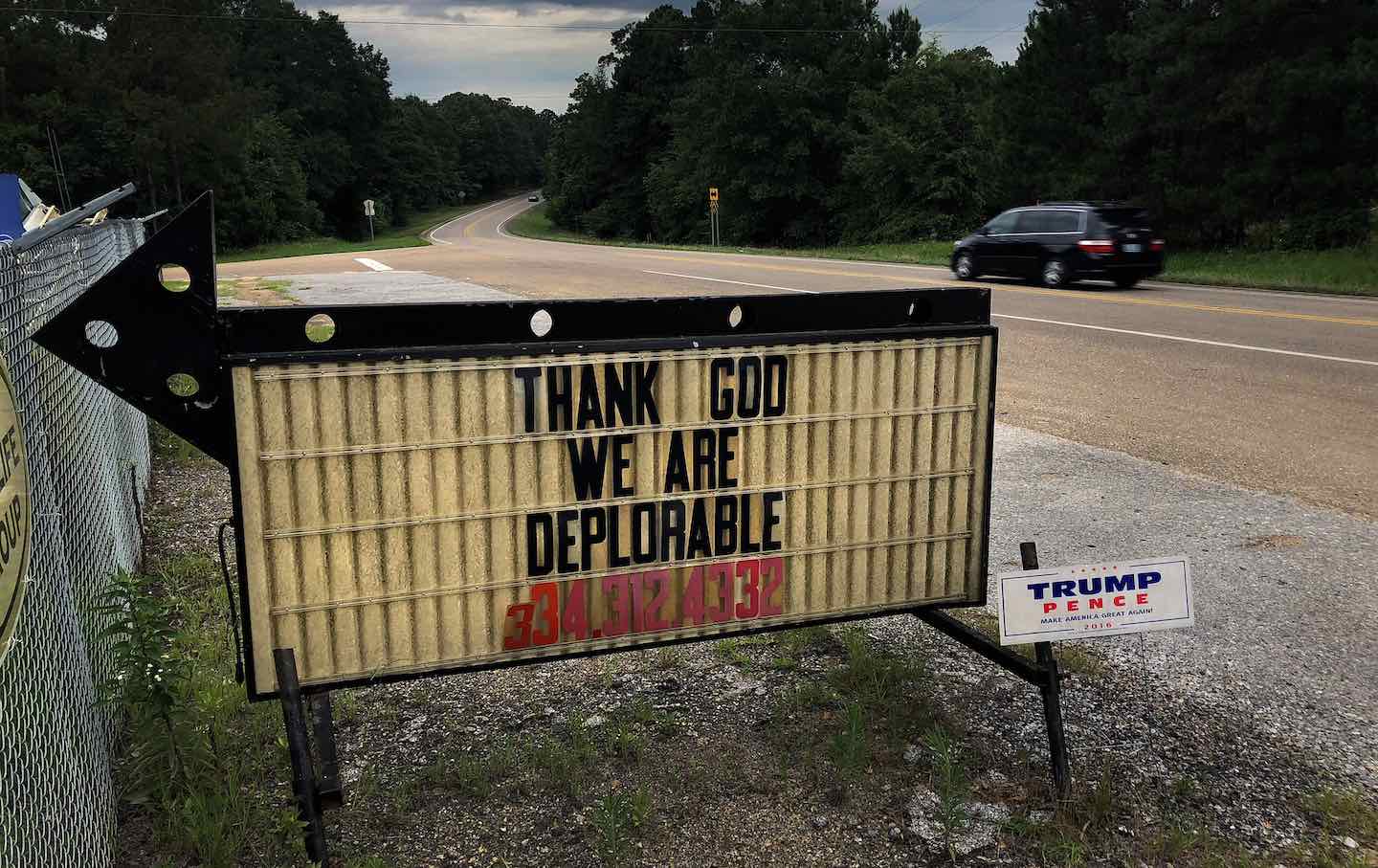
A sign in Alabama, 2018.
(Michael S. Williamson / The Washington Post via Getty Images)
This article originally appeared at TomDispatch.com. To stay on top of important articles like these, sign up to receive the latest updates from TomDispatch.com.
Most days, in the heart of Pennsylvania’s Bible Belt, the old sanctuary at Christ Lutheran Church sits empty. Decades ago, it was home to a congregation of 3,000 people. By the late 1990s, that number had dwindled to seven. At the turn of the millennium, Jody Silliker, a young minister fresh out of seminary, was sent to shutter the downtown church, a mile from the state legislature in Harrisburg.
Instead, she immersed herself in the deindustrialized community, meeting unhoused families, the unemployed, migrant workers, sex workers, and other low-wage laborers. Just a few years after welfare reform eviscerated the social safety net and proclaimed the era of “personal responsibility,” Silliker retrofitted the church annex and opened a free medical clinic.
Earlier this spring, we visited Christ Lutheran. We’ve been on the road since April, meeting with leaders from poor and dispossessed communities in this country and sharing notes from our new book, You Only Get What You’re Organized to Take: Lessons from the Movement to End Poverty. As the Trump administration abducts our neighbors off the streets and eviscerates everything from Medicaid to the Supplemental Nutrition Assistance Program, we want to better understand what it will take to ignite a democratic awakening in this country. How, in the words of theologian Howard Thurman, the “masses of people, with their backs constantly up against the wall” in Donald Trump’s America, can push back together.
A Battle for the Bible in the Battleground State of Pennsylvania
In small towns, as well as cities like Harrisburg, there is an underreported but epic struggle being waged for the hearts and minds of everyday people, with ripple effects for the entire nation. And the church—its pulpit, pews, and survival programs—is a critical staging ground for that struggle. There are Christians who are preaching and practicing the ministry of Jesus, the son of God, who himself was unhoused and undocumented and sided with the poor, the sick, the indebted, the incarcerated, and the immigrant, while decrying the idolatry of tyrants.
And then there are Christian nationalists, whose religion of empire is more akin to the worship of Caesar than the Jesus of the scriptures.
Today, Christian nationalists are attempting to transform our democracy into their dominion and remake (or simply dismantle) the government in the image of Project 2025. Earlier this spring, even before Trump’s disastrous “Big Beautiful Bill” passed Congress, Paul Dans, the architect of Project 2025, marveled that the new administration’s policies were unfurling on a scale and scope beyond his “wildest dreams.” Now, those same Christian nationalists are gutting access to Medicaid, banning reproductive freedom and gender-affirming healthcare, criminalizing the unhoused, and scapegoating immigrant communities in the courts and Congress, even though the scriptures decry such actions. “Woe to you who deprive the rights of the poor, making women and homeless children your prey,” laments the prophet Isaiah.
Current Issue
Thankfully, there are brave faith leaders standing firmly in the breach, refusing to let the Bible and the church be hijacked by extremists. At Christ Lutheran, Jody Silliker’s successor, Pastor Matthew Best, is now following in her footsteps. Just a few miles from Life Center, an evangelical megachurch that hosted Elon Musk late in the 2024 election season, Pastor Best continues to transform his resplendent church into a community mission. On the second floor, volunteer dentists pull rotten teeth and perform root canals, cost-free. In the basement, nurses treat emergencies, mental health crises, and chronic health issues. More than 50 national flags hang from the ceiling, each representing the nationality of a patient. Since 2018, 100,000 people have walked under those flags to receive medical care. Nobody is asked for payment, documentation, or insurance.
In early July, right after Trump signed his Big Beautiful Bill, Pastor Best preached a sermon reminding his multiracial, multilingual, intergenerational, and predominantly poor congregation that they were not alone in feeling like exiles in their own land. As he put it,
“Jeremiah 29 is a letter written to people in exile—or about to be. It’s sent to those who have lost everything: their homes, their land, their freedom, their safety. It’s sent to those who feel like strangers in a strange land, people who are trying to make sense of how everything they depended on has fallen apart. At the time of this letter, some of the people of Judah have already been taken into exile in Babylon. They were the first wave—the leaders, artisans, and young people deported when Babylon invaded. They are trying to build a life in a strange land. But back in Jerusalem, others are still there—living in a fragile illusion of normal. The temple still stands. A king still rules. But it won’t last. More exile is coming.”
To bring his point home, Pastor Best translated the Bible into what he called “Harrisburg English”:
This is what the Lord says to all of you living in exile—the ones just barely scraping by, the ones pushed to the margins, the ones wondering if God has left.
“I see you. I haven’t abandoned you. Build your homes—even if they’re one-room apartments. Grow food—even if it’s a tomato plant in a pot. Love your families—whatever they look like. Create beauty in the middle of struggle. Pray for your city—even when it feels broken. Don’t check out. Don’t give up. For in its healing, you will find your own. Don’t listen to those who say things are fine. Don’t trust those who profit off your pain. Because I know the plans I have for you,’ says the Lord. ‘Plans for welfare and not for harm. Plans to give you a future and a hope. When you cry out, I will listen. When you search for me with your whole heart, you will find me. Not in the halls of Congress. Not behind gated communities. But in free clinics. In shared meals. In prayers whispered through tears. In justice rolling down like waters. I will gather you. I will bring you home.”
That, beloved, is the gospel in exile.
Pastor Best’s bottom-up ministry is mirrored by others in that area. His friends Tammy Rojas and Matthew Rosing, who have survived homelessness, incarceration, and low wages, are commissioned ministers with the Freedom Church of the Poor, a spiritual home for grassroots organizers founded during the first month of the Covid-19 pandemic. They are also longtime leaders of Put People First PA!, which organizes poor people across the state of Pennsylvania to defend Medicaid and demand universal healthcare.
In 2019, Rojas and Rosing led an effort to stop the corporate capture and closure of St. Joseph Hospital in Lancaster, an hour southwest of Harrisburg. For the couple, the fight couldn’t have been more personal: Rojas had been born at that hospital and Rosing received lifesaving care there on multiple occasions. Ultimately, despite their efforts, St. Joseph was closed.
After that defeat, they redoubled their efforts to organize within the region’s abandoned communities. Today, in the wake of Trump’s historic Medicaid cuts and as Rojas and Rosing anticipate the closure of more hospitals, they continue to recruit new members and allies for their “Healthcare is a Human Right” campaign at feeding programs and free clinics like the one at Christ Lutheran. Around their necks, they all too appropriately wear stoles that read: “Fight Poverty, Not the Poor” and “Jesus Was Homeless.”
Popular
“swipe left below to view more authors”Swipe →
Dominionism in the “City on the Hill”
Rojas and Rosing face formidable opposition in the region. In Lancaster, where they live, Christian nationalists are working hard to amass power. In recent years, the New Apostolic Reformation (NAR) has set up shop in that historically Anabaptist area. Once a fringe movement of the Christian Right, NAR has quietly built a sophisticated and well-funded national operation over the last couple decades. In 2024, the Southern Poverty Law Center described it as the “greatest threat to American democracy that most people have never heard of.”
NAR churches in Lancaster have proliferated, taking over, or “steeplejacking,” historic and dying churches. On first glance, such local church activity may appear quite benign. NAR leaders provide food and other material and spiritual aid through their ministries, artfully deploying the language of diversity and encouraging people to “come as you are.” Some families attend services just to sing lively renditions of contemporary Christian music. Indeed, many people join those churches, which have become de facto community centers, for the most human of needs: connection and fellowship.
Stick around long enough, though, and you’ll discover an institutional pipeline suffused with toxic theology that funnels people toward Christian nationalism. In their churches, food banks, recovery services, and community meetings, local NAR leaders offer individual and highly spiritualized explanations for this country’s systemic crises of poverty, homelessness, hunger, and addiction. The solution to these and other social problems, they insist, is fidelity to a dominionist God and a theology eager to bring Christian nationalism to, and keep it in, power. Forget science, reasonable public policy, or the separation of church and state. In meetings with more dedicated church activists, these same leaders invoke Biblical imagery to proclaim spiritual warfare against “demonic” influences in our government, schools, and family structures (that is, diverse expressions of religious, political, or gender identity).
This far-right movement melds its grassroots activity in south-central Pennsylvania with a broader campaign to influence a new generation of county and state politicians, law enforcement officials, businesspeople, and educators. In the years ahead, Christian nationalists like them, who now command power at the highest reaches of the federal government, will only intensify their activities across the country. Indeed, a number of figures within Trump’s cabinet and his coterie of advisers, as well as congressional leaders like Speaker of the House Mike Johnson, have close ties to the Christian nationalist ecosystem. These are the same politicians who championed Trump’s Big Beautiful Bill, including its historic tax cuts for the wealthy, increased military, detention, and immigration enforcement spending, and death-dealing cuts to the social safety net.
A Moral Resurrection in the Age of Trump?
To fight back, we need to forge new alliances across racial, religious, geographic, and partisan lines. Certainly, today’s ongoing political crisis should remind concerned Christians that they can’t sit out the battle for the Bible and should remind the rest of us that we can’t concede religion to extremists. Christian nationalists weaponize the Good Book because they believe they have a monopoly on morality and can distort the word of God with impunity.
The policy effects of their theological distortions will continue to be devastating. In early June, for example, the Minnesota state legislature voted to strip healthcare from undocumented immigrants, despite majority control by the Democratic-Farmer-Labor Party. To rationalize his vote, Republican Representative Isaac Schultz blithely argued: “The role of the church—the role of people of faith—is to care for our neighbors. Yes… But not in this instance, specifically.”
Clearly, Shultz has not studied the Bible closely enough. If he had, he would have discovered that the Bible’s 2,000 passages about poverty and justice constitute perhaps the most important mass media ever produced that had something good to say about immigrants, the poor, the sick, and otherwise marginalized people. In scripture after scripture, Jesus condemns the violent policies of empire, which enriches itself on the backs of the poor. Instead, he proclaims the Good News of Jubilee: a vision of social and economic emancipation for the entirety of humanity.
In this country, the liberatory heart of Christianity, among other religious traditions, has always been a source of strength for popular social movements. In every previous era, there were people who grounded their freedom struggles in the holy word and spirit of God. Today, the work of Pastors Best, Rojas, and Rosing in Pennsylvania’s Bible Belt underscores the still-vital role of religion in advancing a more just and vibrant democracy in the Trump era. In Harrisburg and Lancaster, these Christians are building a bottom-up and deeply moral movement that recognizes the material, spiritual, and emotional needs of everyday people.
“The church speaks to birth, death, and resurrection,” Pastor Best explained while giving us a tour of Christ Lutheran’s free medical clinic. “This is the resurrection.”
More from The Nation
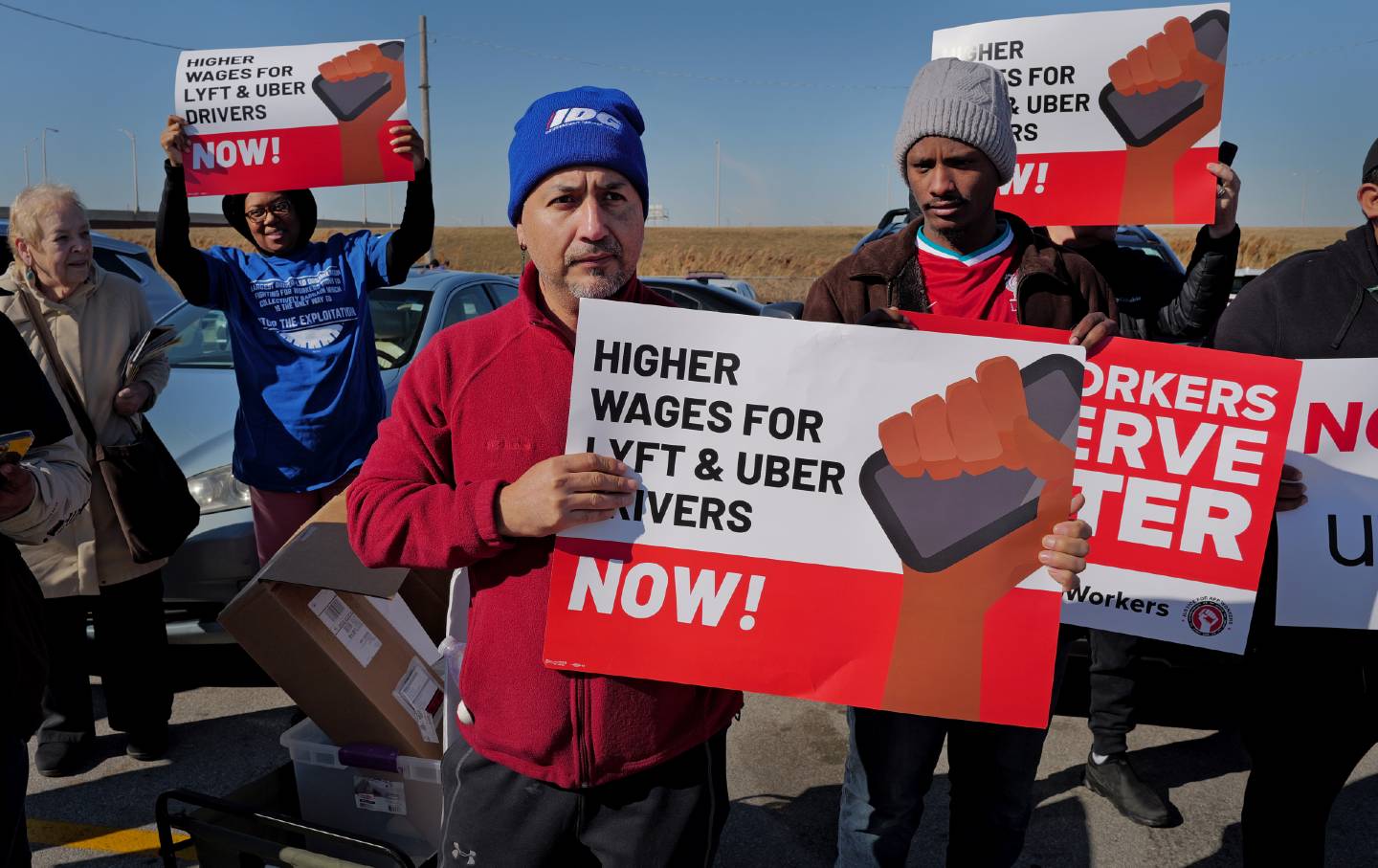
As the tech industry moves increasingly into alignment with the far right, the issue of worker power has never been more important. The Chicago campaign offers some key lessons.
Will Tanzman and Lori Simmons
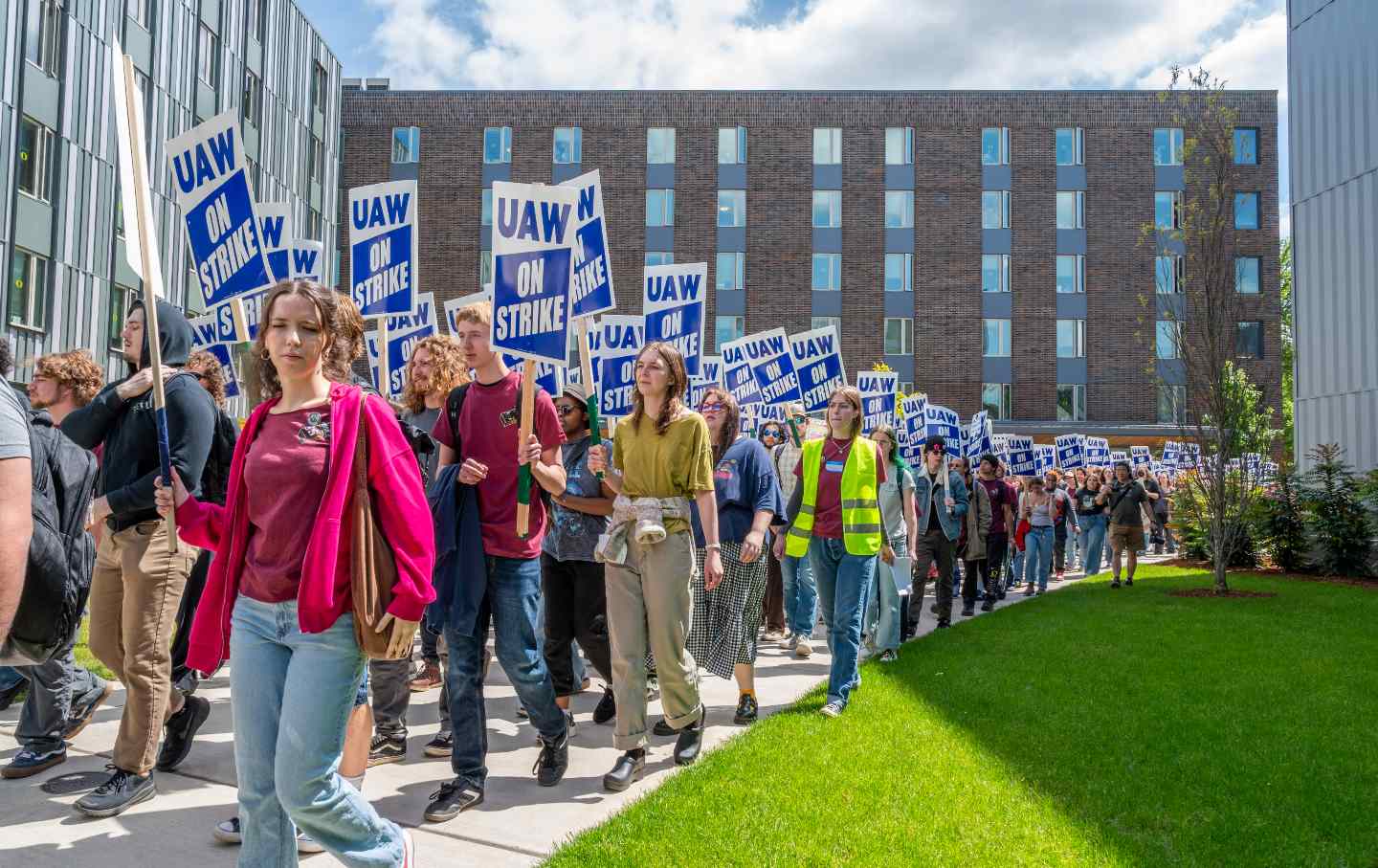
Around 4,000 members of the University of Oregon Student Workers went on strike in April, winning the first contract that covers every undergraduate worker at a public university….
StudentNation
/
Andrew Berka
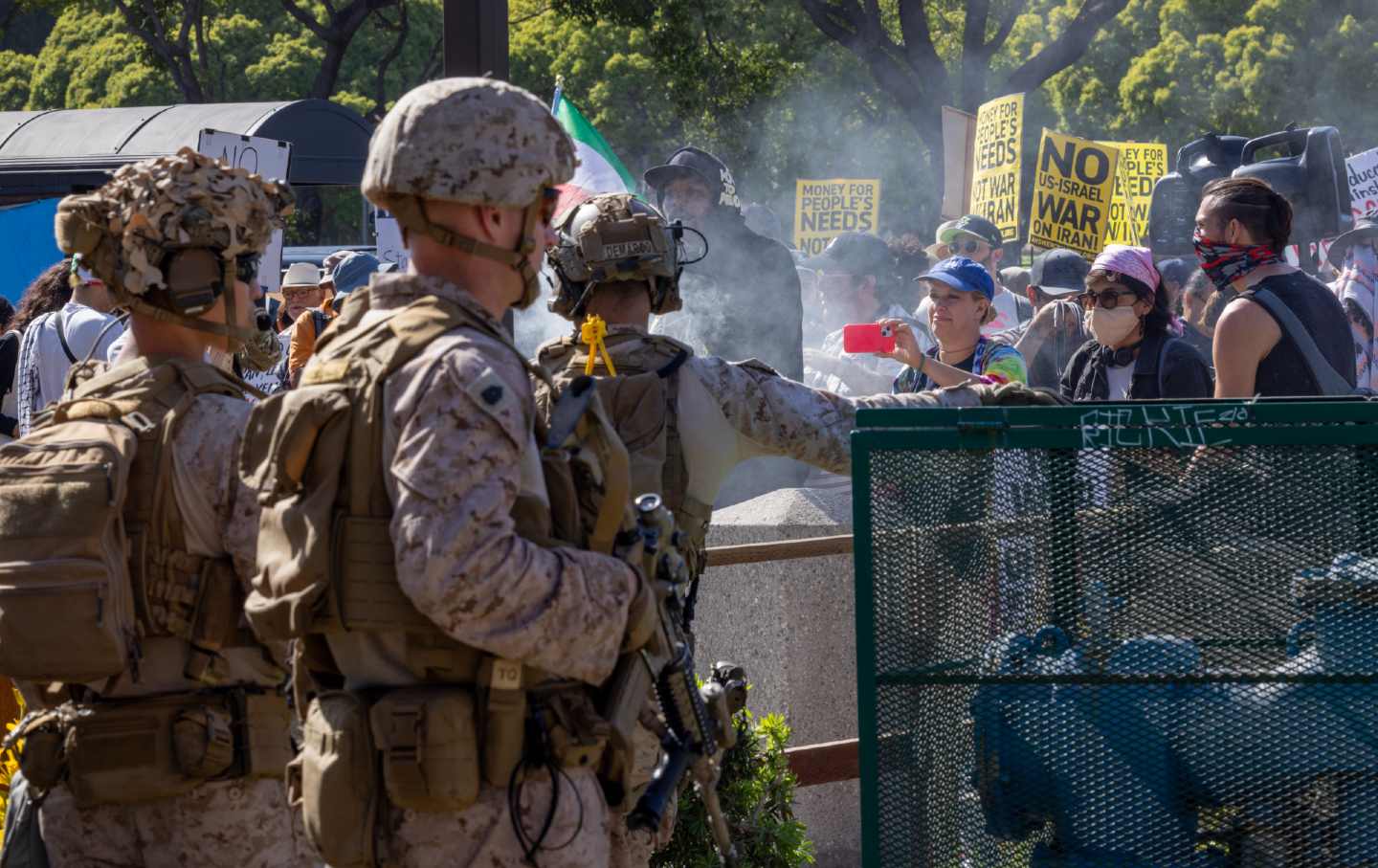
Donald Trump killed the anti-war right—but offers a chance to revive the anti-war left.
Jeet Heer
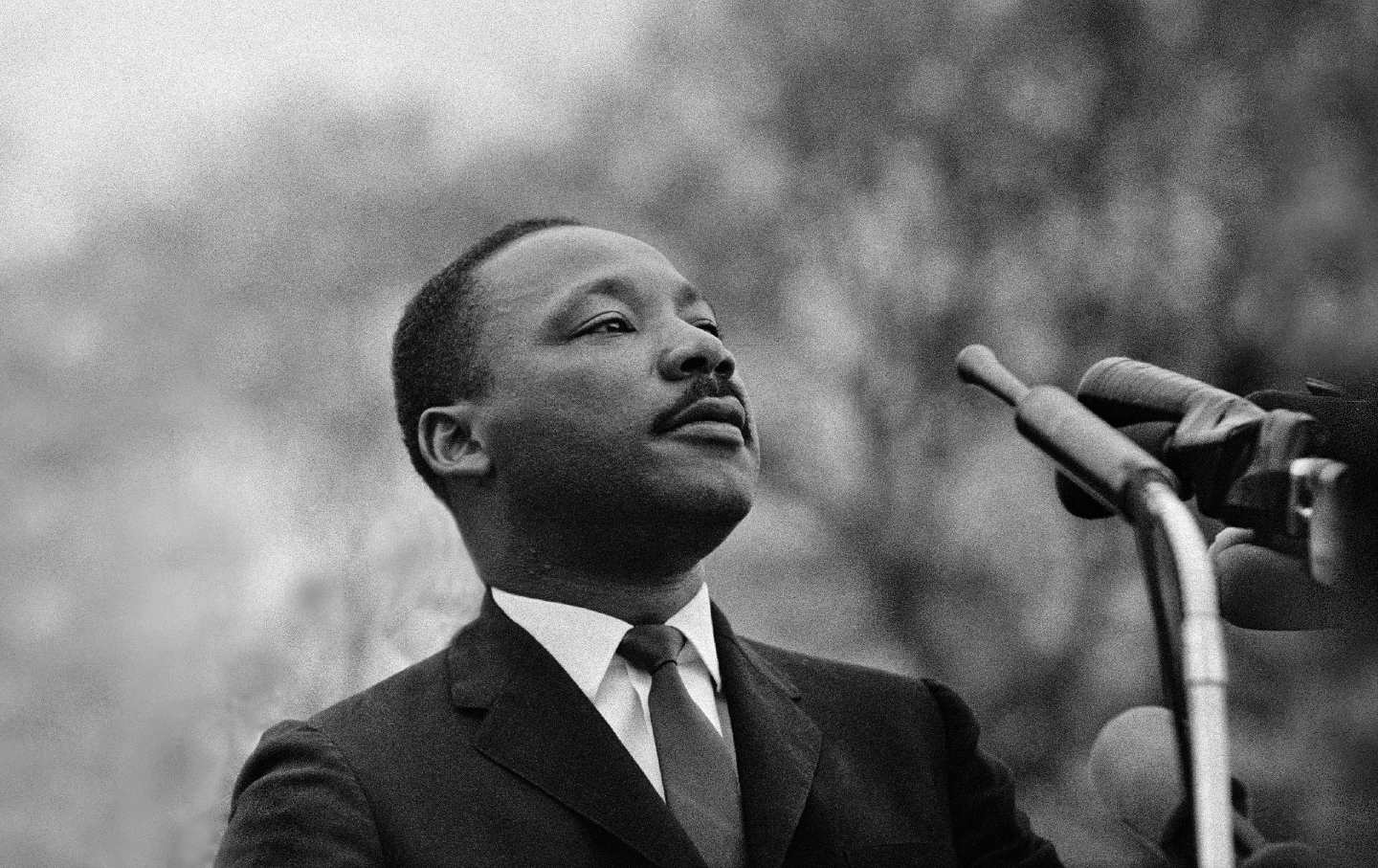
This Juneteenth we need to discard the caricatures of King that we so often see and learn from what he actually did and believed.
Jeanne Theoharis

Israel’s assaults on Iran are attacks from an actively genocidal nuclear state on an already oppressed people. We must oppose US involvement and calls for craven acquiescence.
Kaveh Akbar