
There’s no free lunch, but RBI aims to minimize the cost of stability: Governor
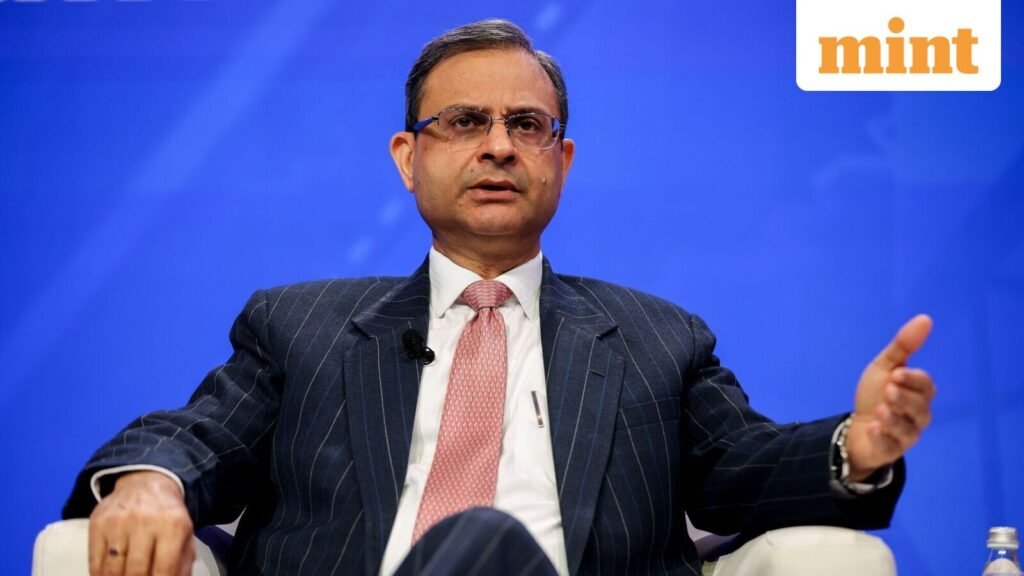
The Reserve Bank of India is looking to promote efficiency and innovation without undermining financial stability, Governor Sanjay Malhotra said on Friday, stressing that every regulatory change carries a cost that the central bank is mindful to minimize.
“We recognize that just like there are no free lunches, regulation to enhance stability too is not devoid of costs. There are trade-offs between stability and efficiency,” Malhotra said at the SBI Banking and Economics Conclave 2025 in Mumbai. “It will be our attempt to strike the right balance, keeping in view the benefits and costs of each and every regulation.”
Malhotra emphasized that short-term growth achieved at the cost of financial stability can have “bigger consequences for long-term growth”.
Research shows financial instability may not only more than offset the gains of higher short-term growth, but also make recovery more distressful and longer, he said.
The slew of over 20 regulatory proposals announced on 1 October—along with the monetary policy statement—including steps to improve banking competitiveness, credit flow, ease of doing business, consumer satisfaction, foreign exchange management and rupee internationalization, were designed to “maintain the balance between the drive to innovate and grow and the RBI’s duty to protect,” the governor said.
“These measures do reflect fresh thinking but are incremental, and do not introduce any sea changes in regulation as a whole,” he said. Each measure has to be seen in the “continuum of regulatory evolution and not in isolation” as they together create a multi-layered defence to keep systemic risk in check.
Wherever the RBI is easing restrictions, Malhotra said, “sufficient guardrails” have been provided to ensure prudence.
“The role of a regulator is like that of a gardener whose job does not stop with providing the ‘enabling environment’ for the growth of the plants. The gardener keeps on monitoring the growth of the plant and prunes unwanted growth to shape a collective orderly beautiful garden,” he said.
The central bank chief, however, cautioned that no regulator or regulations can or should substitute for boardroom judgement, especially in a diverse country such as India, given that each case, loan, deposit and transaction is different, with varying risks and opportunities.
“We need to allow the regulated entities to take decisions based on the merit of each case, rather than prescribing a one size fits all rule,” he said.
Scope of new measures
Even though the recent measures were issued after formal and informal consultations, deliberation and thought, and detailed impact assessment, most of these announcements are draft as the RBI would prefer to finalise them after taking inputs from all stakeholders. This is also because the recent past has seen “structural transformation of financial intermediation into a sophisticated and layered system” with nimble fintechs and non-banking financial companies (NBFCs) now assuming a greater role in sourcing and origination.
“Our approach is calibrated: granting banks greater commercial leeway for growth, innovation and ease of doing business, while ensuring that risks are minimized and financial stability is maintained,” he said.
Speaking in detail on the recent measures, Malhotra said the project finance directions look to address risks arising from regulatory approvals and availability of land, whereas the proposed transition to expected credit loss (ECL) provisioning will help early recognition of deterioration in asset quality.
“Indian banks today are far more mature than they were a decade ago,” he said, adding that this evolution implies that prudential rulebooks too should evolve in a calibrated manner. “Banks are now stronger and supervision more alert even as alternative risk-bearing pillars have deepened and market-based risk transfer mechanisms have become more effective.”
Deepening capital market exposure
Development of capital markets and credit risk transfer channels, such as securitisation, now provide a conduit for risk transfers, warranting a need to relook some of the regulations and exposure limits, Malhotra said.
These include proposals to enhance the limits for lending to individuals against securities and rationalization of norms for lending to capital market intermediaries. The revision in limits has been accompanied by a more structured loan to value (LTV) framework, sensitive to the risks of the underlying securities.
In addition, the proposed removal of limits on loans against debt instruments, while retaining the regulatory limits for equity instruments, recognizes the fundamental difference between the two instruments from a risk perspective, Malhotra said.
“An additional comforting factor is that only listed and investment grade debt securities are proposed to be permitted as collateral. This rationalization is also expected to foster a virtuous positive feedback loop for the development of the bond market,” he said.
The governor said he expects broader measures—such as allowing banks to undertake acquisition finance—will benefit the real economy, whereas the proposed guardrails—such as limiting bank funding to 70% of deal value, limits on debt to equity ratio, aggregate exposure limits relative and eligibility criteria—will contain concentration and credit risks.