Sex, Alcohol, White Horse in Film ‘Stars of Little Importance’
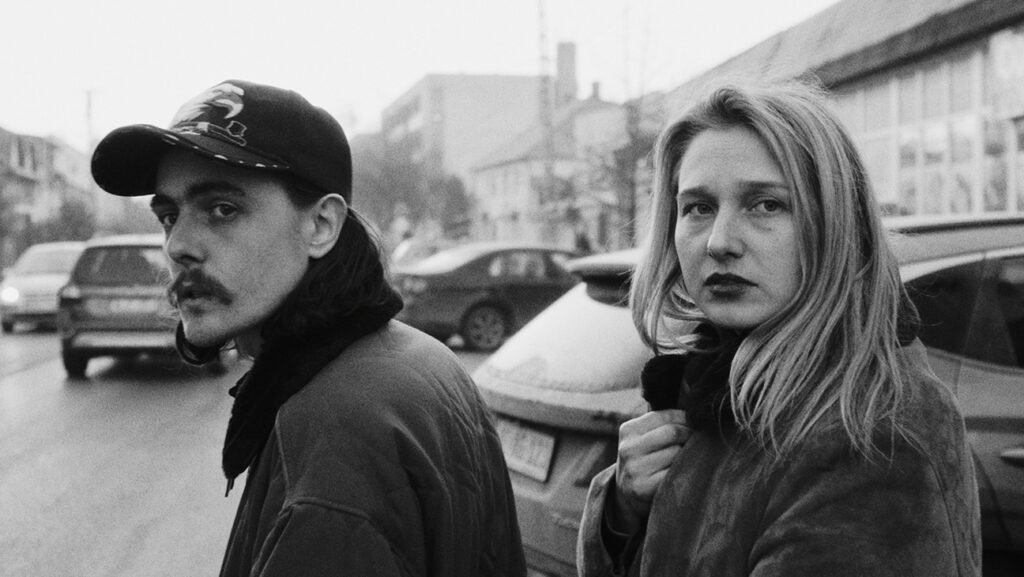
Sex, plenty of alcohol, girl talk, a white horse roaming the streets and stark black and white cinematography? Those are just some of the elements that Hungarian actor Renátó Olasz brings to the screen in his feature directorial debut Stars of Little Importance (Minden Csillag), which examines nostalgia and loneliness. Executive produced by none other than Hungarian auteur Béla Tarr, the movie, listed as a comedy but also containing drama, just world premiered in the competition lineup of the 31st edition of the Sarajevo Film Festival.
“A brother and sister return home from the capital for Christmas to reunite with childhood friends and first loves,” reads a synopsis. “They hold a party. They drink heavily. Nothing is the same as before. But everything is good, right?”
“Through the siblings’ eyes, we observe an abandoned city, where time has frozen, and we experience some Hungarian rural destinies,” it continues. “The siblings must face some questions: Where are they going now that they are 30 years old? Is this how they imagined their lives would be when they were teenagers?”
Olasz and his co-dramaturg Anna Hámor didn’t write a script, opting instead to discuss with their cast key themes and scenes and leaving most up to improvisation. The cast consists of Olasz, Andrea Waskovics, Emőke Pál and János Szén. Csaba Bántó handled cinematography, with Judit Czakó as editor and music courtesy of Ádám Mészáros.
The producer of Stars of Little Importance is Genovéva Petrovits of Kino Alfa.
THR asked Olasz about adding feature directing to his resume, how he handled the double duty of director and actor, his relationship with Tarr and how he made the movie on a low budget with little hope for support from Hungary’s government.
The filmmaker doesn’t see his new directing credit as a big leap from his acting work. “I hold a Master’s Degree in directing. I finished school before going to acting school, but from my very young age, including in high school, which had a drama class, I directed a lot of theatrical plays and also acted in [them],” he explained. “So, I have this passion for creating, and I wanted to transform that into the filmmaking process. And I like creating in a community.”
Olasz met Tarr when the latter taught a workshop in Budapest. “Since then, we have been friends, and he’s my mentor, my master,” Olasz told THR. “He has supported me through the whole film process. Unfortunately, he is currently in a hospital due to a health issue and can’t be here, but he has been texting me. We really, really like each other.”
There is really only one core lesson he learned from Tarr. “Béla teaches only one thing: just be yourself,” he explained. “Just do what you really feel like and don’t give a shit about any rules.”
One of the inspirations for the film and shooting it in the town where Olasz was born came on a scouting trip. “My cinematographer and I are really good friends, and we were on a location scout for another project in our hometown one night, and we just drove through. I asked him to make a recording of the street,” the director recalled. “And when we saw the footage, we just realized that this city is fucking empty and everything has changed. You know, it just looks like a movie set or something like that. And it’s this experience that just depressed me. It was like a punch to my face. Everybody moved abroad or to the capital. It was crazy, but that feeling inspired me.”
One thing hasn’t changed, however: the pub that features prominently in the film is where Olasz spent much of his young life. “The actual pub was the pub of my childhood and my teenage years,” says Olasz. “And it’s true what I say at the beginning of the movie — that my parents fell in love at that bar. It looks the same as it did 40 years ago. Nothing has changed. Time just stopped there. So that’s why I chose this place, because it has a lot of memories in it.”
Despite this being his first feature, Olasz was adamant about working without a script. “I wanted to try my own method. And because of my background in theater, I really like to create with the actors, the dramaturg, and the DOP from the very beginning,” Olasz told THR. “So we figured out the themes, topics and characters with each other. I created tons of notes, but we really only had ideas for scenes but no dialogue. Every day, we met at the location, talked about what we wanted to shoot that day and what we wanted to express in the scenes, and we figured it all out.”
Key themes that the creatives wanted to explore include “nostalgia and melancholy,” Olasz said. “But it was my aim to combine poetic cinematic language with really raw, naturalistic stuff. I just miss movies with stuff from real life, you know, everybody vomiting or using dirty words. It’s just a part of life, and not just the depressive stuff, but also the humor and jokes and everything. I like movies which are full of life.”
Olasz cited John Cassavetes as one of his favorite filmmakers. “I really like how he handled real life, how we exist, how we behave,” he said. “I like to just observe this kind of thing.”
So what is the meaning of the white horse shown repeatedly throughout the movie? “There is no exact meaning. I’m not philosophical,” the filmmaker told THR. “I wanted something emotional for the audience’s brain and soul. The white horse could be a dream, it could be reality, it could be anything. The meaning depends on you. I’m not bullshitting. I did not want to give any meaning to it to let the audience members think and feel what they want.”
Does Olasz have a new idea for a second feature as a director? “I have an idea,” he told THR, but mentioned that money remains a challenge. “We created this movie without much money, so I tried to work in a low-budget way, not a no-budget way,” he said. In Hungary, “it’s impossible” to get funding due to the right-wing government of Viktor Orbán, Olasz said. “If you are not loyal to the government, you can’t get any money. If you are not a propagandist, you can’t get money. It’s really hard to work in Hungary under these kinds of circumstances.”