Satellite constellations are too bright—may threaten astronomy and our night sky
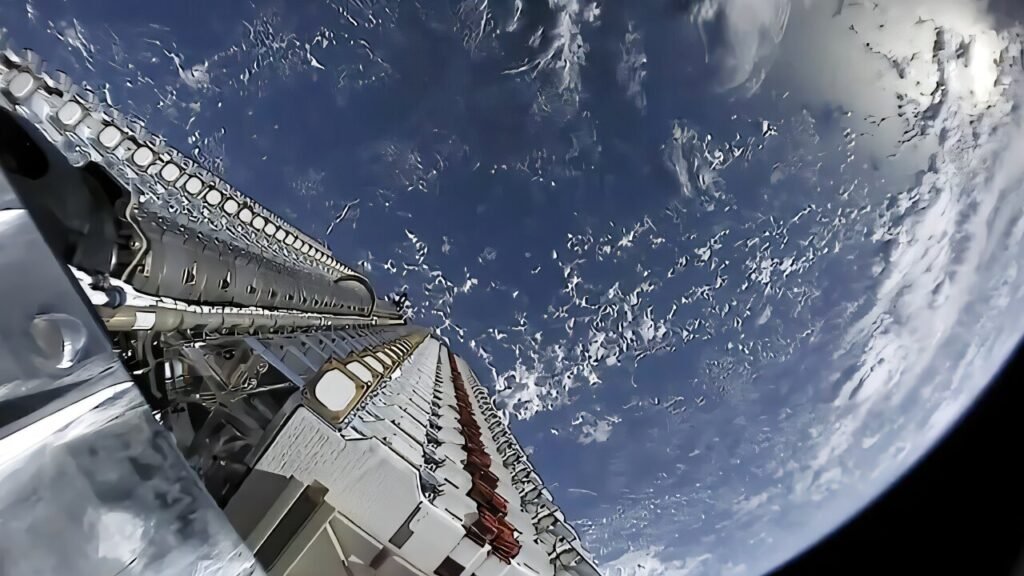

The race to connect the world through satellite internet has created an unexpected casualty: our view of the cosmos. A new study reveals that major satellite constellations, including Starlink, BlueBird, and OneWeb, are significantly brighter than international standards allow, potentially disrupting both professional astronomy and the simple pleasure of stargazing.
The International Astronomical Union (IAU) has established clear guidelines for satellite brightness to protect astronomical research and preserve the night sky’s natural beauty. These standards set two critical thresholds; satellites should not exceed magnitude 7 to avoid interfering with professional telescopes, and they should stay dimmer than magnitude 6 to prevent distracting from the aesthetic appreciation of the night sky.
However, new research analyzing brightness statistics for thousands of satellites from major constellations paints a troubling picture. The study examined spacecraft from Starlink, BlueBird, China’s Qianfan and Guowang networks, and OneWeb, finding that nearly all these satellites exceed the magnitude 7 limit that protects professional research. Most also surpass the magnitude 6 reference point where they begin to interfere with casual stargazing.
The findings are published on the arXiv preprint server.
To put this in perspective, the magnitude scale works backwards, lower numbers indicate brighter objects. The faintest stars visible to the naked eye under dark skies are around magnitude 6, while the brightest stars are magnitude 1 or lower. When satellites exceed these brightness limits, they become visible streaks that can contaminate astronomical images and distract from the natural night sky.

As companies race to deploy thousands of satellites for global internet coverage, the problem is only getting worse. SpaceX’s Starlink constellation alone has launched over 5,000 satellites, with plans for tens of thousands more. China’s Qianfan and Guowang projects, along with Amazon’s planned Kuiper constellation, could add thousands more bright objects to our skies.
Professional astronomers are already feeling the effects. Ground-based telescopes, which have provided most of our knowledge about the universe, now routinely capture satellite trails that can ruin observations. These streaks force astronomers to discard data, reducing the efficiency of expensive research programs and potentially limiting discoveries about distant galaxies, exoplanets, and cosmic phenomena.
The problem extends beyond professional astronomy. Amateur astronomers and casual stargazers report increasing frustration with bright satellites crossing their field of view during observations. This light pollution from space adds to the existing challenges of urban light pollution, further disconnecting people from the natural night sky.
The IAU’s Center for the Protection of the Dark and Quiet Sky From Satellite Constellations Interference has been working with satellite operators to develop solutions. Some companies have experimented with darker coatings, different satellite orientations, and operational procedures to reduce brightness. However, this new research suggests these measures haven’t been sufficient to meet the established standards.
The findings highlight the urgent need for stronger international cooperation between satellite operators, astronomers, and regulatory bodies to preserve both scientific capabilities and the cultural heritage of the night sky for future generations.
More information:
Anthony Mallama et al, Satellite Constellations Exceed the Limits of Acceptable Brightness Established by the IAU, arXiv (2025). DOI: 10.48550/arxiv.2507.00107
Journal information:
arXiv
Provided by
Universe Today
Citation:
Satellite constellations are too bright—may threaten astronomy and our night sky (2025, July 15)
retrieved 15 July 2025
from https://phys.org/news/2025-07-satellite-constellations-bright-threaten-astronomy.html
This document is subject to copyright. Apart from any fair dealing for the purpose of private study or research, no
part may be reproduced without the written permission. The content is provided for information purposes only.