
RBI governor urges balancing regulatory prudence with fostering innovation
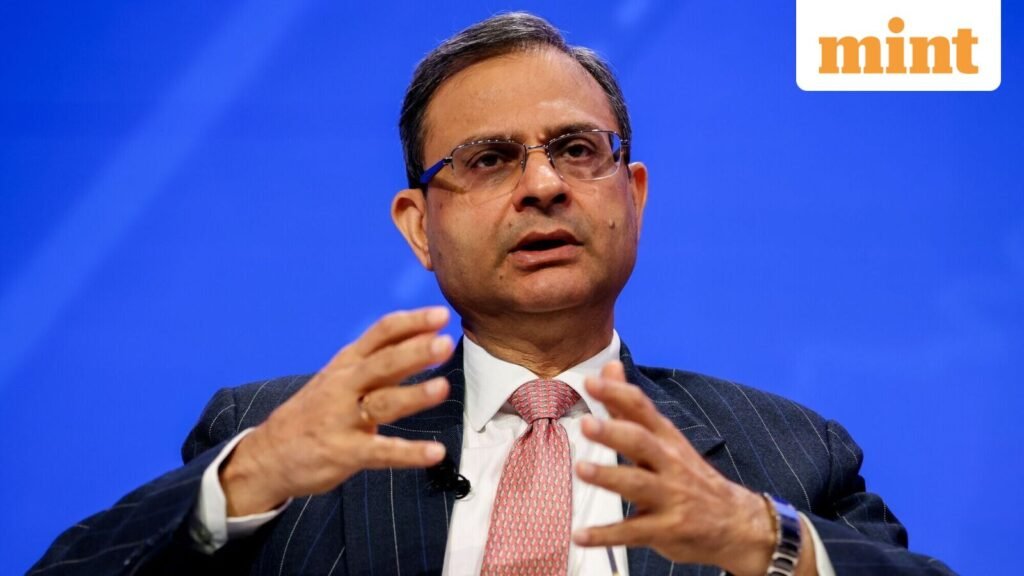
Reserve Bank of India (RBI) governor Sanjay Malhotra on Wednesday called for balancing pragmatic regulation and supervision with fostering innovation, growth and consumer protection.
In his foreword to the central bank’s half-yearly Financial Stability Report, he said maintaining financial stability and strengthening the financial system remain the regulator’s north star.
“But financial sector regulators recognize that financial stability is not an end in itself,” he said.
According to Malhotra, these objectives are mutually reinforcing and vital for increasing productivity and long-term economic growth. “The most important contribution the policymakers can make is to foster a financial system that is robust and resilient to shocks, efficient in providing financial services and promotes responsible innovation.”
The central bank has been on a deregulation spree. In November, it released 244 consolidated master directions, replacing more than 9,400 circulars and guidelines that had accumulated over several decades. “This is only a consolidation, not a change in regulations. The purpose is to eliminate redundancy, remove conflicts, and make compliance simpler and more efficient,” RBI deputy governor Shirish Murmu had told reporters.
Robust economy
Meanwhile, Malhotra said, despite global challenges, the domestic economy and the financial system remain robust and resilient. He said this was owing to strong economic growth, benign inflation, healthy balance sheets of financial and non-financial firms, sizeable buffers and prudent policy reforms.
India’s retail inflation, as measured by the Consumer Price Index, stood at 0.70% in November, up from 0.25% in October.
In December, the RBI cut the repo rate by 25 basis points (bps) to 5.25%, citing a “rare goldilocks period” where growth remains robust and inflation benign. The Indian economy posted a surprising six-quarter high growth rate of 8.2% in the quarter ended September, significantly higher than the RBI’s 7% projection.
For 2025-26, the six-member Monetary Policy Committee (MPC) raised its gross domestic product (GDP) forecast to 7.3% from 6.8% previously and lowered the retail inflation projection to 2%, from 2.6%.
“Despite a volatile and unfavourable external environment, the Indian economy is projected to register high growth, driven by strong domestic consumption and investment,” said Malhotra.
Nonetheless, he pointed to near-term challenges from external spillovers and said the RBI continues to build strong guardrails to safeguard the economy and the financial system from potential shocks.
US President Donald Trump has imposed a 50% tariff on Indian goods, with industries such as textiles and auto components being hit the hardest.
Malhotra said 2025 was challenging as geopolitical conflicts, trade tensions, and persistent policy uncertainty cast a shadow over the global economy and the financial system. However, the world economy has proven to be more resilient than anticipated, and the financial system has remained steady.
“The outlook for 2026 and beyond, however, is shrouded in uncertainty as the contours of policies that are reshaping the global economic landscape remain fluid and untested,” he said.