
Nudist night at German history museum is a sell out
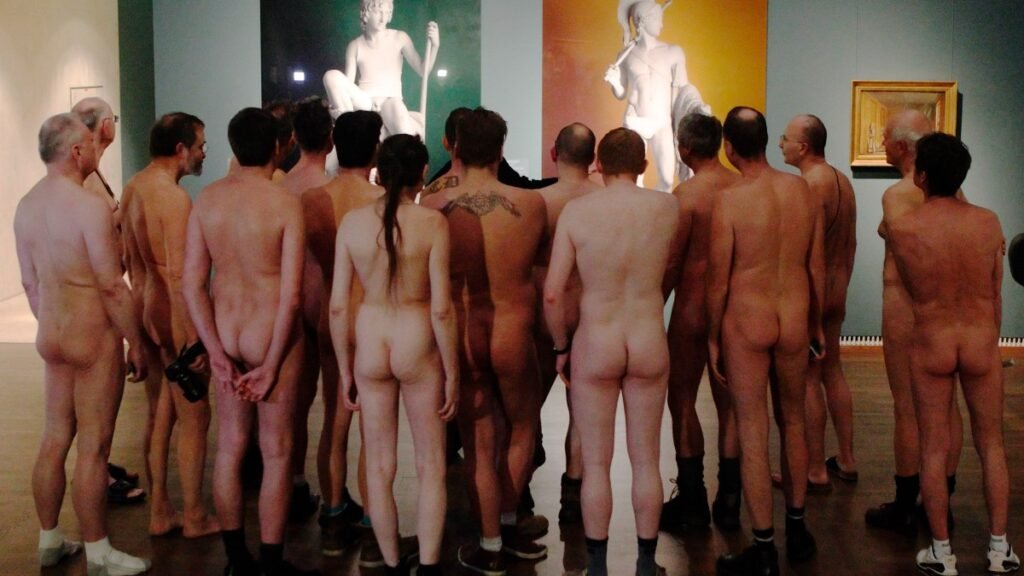
The dress code for the evening tours of the Baden-Württemberg House of History in Stuttgart is bald in its simplicity: guests are asked to turn up with a small towel to sit on, and nothing else.
“We ask for your understanding,” the invitation says, “that at this time the exhibition may only be visited with no clothes on.”
The museum is promoting its show Frei Schwimmen — Gemeinsam?! (Free Swimming — Together?!) on the history of bathing, which deals with fluctuating notions of public morality and sartorial decency, by offering visitors the chance to view it while naked.

The Baden-Württemberg House of History in Stuttgart will host the exhibition
ALAMY

The opportunity to walk around a public institution in the nude has proved so alluring that tickets for the naturist viewings are already sold out, more than a fortnight before the first of two dates.
Public nudity is generally much less of a taboo in Germany than it is in Britain. The tradition of naked bathing stretches back at least as far as the Middle Ages and was revitalised by popular nudist movements that began to emerge in the late 19th century.
The best known of these is the Freikörperkultur, or FKK, which maintains that there is no shame or sexual frisson in the simple fact of nudity and that stripping off in company encourages a healthier relationship with the body.
While dependable statistics are hard to come by, the movement counted hundreds of thousands of members on both sides of the Iron Curtain during its heyday in the Sixties and Seventies.

East Germans enjoying their holidays on a nudist beach on the Island of Ruegen in the 1980s
KLÖPPEL/ULLSTEIN BILD/GETTY IMAGES
The practice has become significantly less fashionable in recent decades: today the FKK clubs have fewer than 30,000 members and surveys suggest that barely a quarter of west Germans and a third of east Germans feel comfortable in spaces where nudity is the norm.
However, many beaches and some open-air waterparks still have dedicated FKK areas at a discreet remove from the rest of the public. It is also common for spas and saunas to rigorously insist that their clientele go textilfrei, or “cloth-free”.
The House of History said that it had decided to hold two naked evenings at its swimming exhibition at the suggestion of GetNakedGermany, a relatively recently founded naturist association.
• Public nudity: it’s no big deal — if you’re German
The museum said the culture of bathing costumes — or the lack of them — was a central element of the show.
“Swimming costumes in the strict sense of the word have only existed since the start of the 20th century,” a spokeswoman said. “Before that, people frequently swam naked in rivers and lakes away from the towns.
“This could rapidly lead to conflicts when it happened in the immediate vicinity of the towns: at the beginning of the 19th century, men and women were bathing in the nude together in the River Blau near Ulm, within view of Ulm Minster [the city’s famous Lutheran church]. This was a scandal for the city authorities and they banned bathing around the city.”
The ethics of bathing costumes are also the subject of lively debate in contemporary Germany and especially in Baden-Württemberg, the southwestern state around Stuttgart.
Some of the region’s open-air swimming pools have banned burkinis and one in the town of Lörrach has recently prohibited all loose-fitting swimwear, including shorts, ostensibly to ensure public hygiene.
There is also a complex and controversial patchwork of rules governing when and where women can go topless. Police are occasionally called in to reprimand female bathers for swimming without bikinis.