
Mississippi may require age verification, parental consent for social media, Supreme Court says
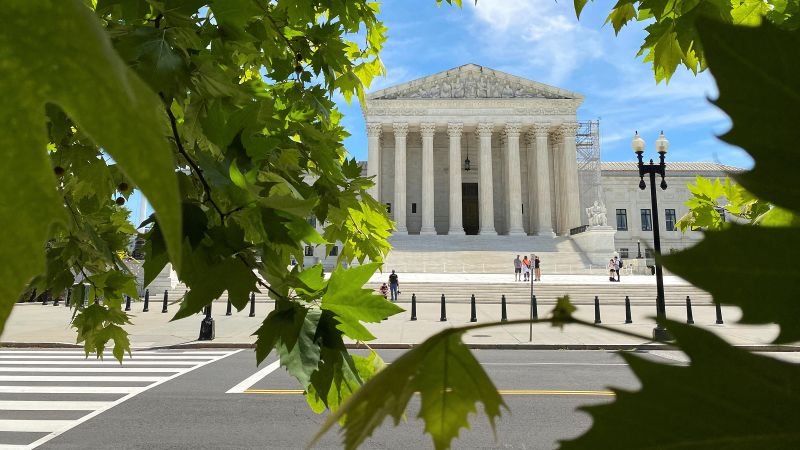
The Supreme Court on Thursday allowed Mississippi to enforce a state law that requires the nation’s largest social media companies to verify the age of their users and obtain parental consent for minors, an effort the state said is intended to protect children from online predators.
There were no dissents and the court did not explain its reasoning, as is often the case on its emergency docket.
Justice Brett Kavanaugh, a member of the court’s conservative wing, wrote a brief concurrence asserting that the Mississippi law is “likely unconstitutional” but said that the internet companies who sued had not “sufficiently demonstrated” that they would be harmed by a temporary order in favor of the state.
A coalition of social media platforms that includes Facebook, X and Instagram – and several outside groups – had urged the high court to block enforcement of the state law, arguing it infringed on users’ First Amendment rights. Though the law at issue in the case affects only Mississippians, many other states – both blue and red – have enacted similar requirements in recent years amid growing concerns over privacy and the safety of young people online.
The Electronic Frontier Foundation, which is supporting the social media companies in the case, said it is tracking laws in at least 10 other states requiring parental consent or age verification for online services. The group, along with several others that filed a brief in the case at the Supreme Court, described the Mississippi law as a “well-intentioned but fundamentally flawed” effort to protect minors online.
Mississippi officials said the state is responding to high-profile reports of “sextortion” and other online crimes. In one case, a 16-year-old Mississippi boy committed suicide after an Instagram user posing as a female initiated a sexual encounter and then demanded a $1,000 payment under threat of exposing their exchanges on the internet.
“The act requires what any responsible covered platform would already do: make ‘commercially reasonable’ efforts to protect minors – not perfect or cost-prohibitive efforts, but efforts of reasonable care based on a platform’s resources,” Mississippi told the Supreme Court in a brief urging the court to leave the law in place.
But NetChoice, a trade group representing the social media giants, said the law infringes on the First Amendment rights of users. And several LGBTQ advocacy groups argued that the law would make it harder for gay and lesbian youth to find safe spaces online.
“Online platforms, including social media sites, offer safe spaces for individuals, including youth, to connect with others who share their identities, access information about LGBTQ+ issues and resources, and explore their gender identity and sexual orientation in a supportive environment,” the groups said.
The law, which was enacted last year, imposes $10,000 in penalties per violation as well as possible criminal penalties.
A federal district court temporarily blocked the law’s implementation, but the 5th US Circuit Court of Appeals halted that lower court order, allowing the law to take effect. The Supreme Court’s decision is a temporary one, laying out what happens while lower courts weigh the law’s constitutionality.
Earlier this year, the Supreme Court let stand a separate law in Texas that requires age verification for pornographic websites in one of the most closely watched First Amendment cases to arrive at the high court in years. The adult entertainment industry had challenged the law as a violation of the Constitution because it restricted the ability of adults to access protected online speech.
Justice Clarence Thomas wrote the opinion for a 6-3 court, which divided along ideological grounds with the court’s three liberals dissenting.
“The statute advances the state’s important interest in shielding children from sexually explicit content,” Thomas wrote. “And, it is appropriately tailored because it permits users to verify their ages through the established methods of providing government-issued identification and sharing transactional data.”