
India’s quest for cooking gas shifts from east to west
The negotiations, happening against the backdrop of the US tariff on Indian goods, support the target set by both countries earlier this year to increase their energy trade to $20 billion. This would include India importing liquified petroleum gas (LPG) from the US through term contracts, and increasing crude oil and liquefied natural gas (LNG) imports.
“Indian OMCs are in talks, collectively, with at least a dozen LPG suppliers in the US. The negotiations are for supplies starting January next year, and the discussions are progressing well,” one of the three people cited above said. The person added that although deals may be signed separately, given that talks are happening at a combined level, the nature of deals would be largely the same.
Targa, OneOk
Some of the major American LPG suppliers are Texas-headquartered Targa Resources and Enterprise Products and Oklahoma-headquartered ONEOK. Queries emailed to the Union ministries of petroleum and commerce, the Indian oil marketing companies, and the US LPG suppliers went unanswered.
India traditionally imports most of its LPG from West Asian countries including Qatar, the UAE and Saudi Arabia through long-term contracts, while other major LPG importing countries source it from the US. The US so far has been supplying India LPG in small volumes through spot deals, and this is the first time the Indian companies may have a term deal with US suppliers. On the other hand, China has been a major buyer of LPG from the US.
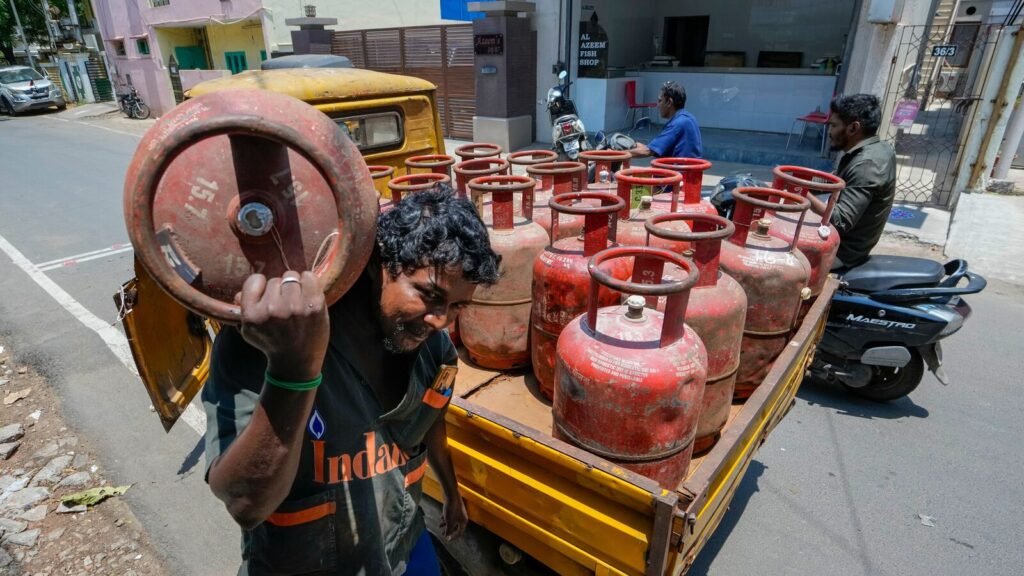
In India, LPG is used primarily for residential cooking, followed by commercial and industrial purposes. India imported LPG worth $12.47 billion in FY25, 19.85% higher than $10.42 billion the previous year. According to Ken Research, as of December 2024, the Indian LPG market was valued at $15 billion, with growth backed by the government’s emphasis on use of LPG for cooking purposes through the Pradhan Mantri Ujjwala Yojana.
Thaw?
The talks with the US firms is seen as indicating a thaw in ties between the two, even as talks on the Bilateral Trade Agreement remain active but are stuck on intractable issues such as dairy and agriculture. US president Donald Trump has also wared that India could face penalties if it continues purchasing petroleum products from Russia.
“India is a huge importer of LPG. US is a large producer of LPG which is produced as natural gas liquids along with shale gas. So, US can be a significant supplier of LPG to India,” said Prashant Vasisht, senior vice president and co-group head, corporate ratings, ICRA Ltd. He added the price of LPG will not be very different and will be competitive compared to the West Asian LPG on a landed basis in India.
In a bid to diversify import sources amid geopolitical tensions and regional instability in West Asia, Indian buyers are already forging new ties. State-run BPCL signed an annual contract with Norway’s Equinor to secure 550 kilotonne per annum of propane and butane, reducing its reliance on the West Asian countries. Reuters last month reported that India plans to source about 10% of its cooking gas imports from the US as part of a broader effort to boost energy purchases to narrow its trade gap with Washington.
Trade war ripples
In March this year, as the tariff war flared between the US and China, a report by maritime consultancy Drewry suggested that if the US-China trade war escalated, Saudi contract prices could attract a premium, with China likely engaging Middle Eastern suppliers and forcing India to diversify its import sources, including the US.
LPG used in India comprises 60% butane and 40% propane. West Asian exports are better suited for this as they are primarily butane-dominated, since their LPG production is a byproduct of oil processing. On the other hand, US supplies are primarily propane-dominated, as LPG production in the US is the byproduct of natural gas processing. According to the Drewry report, Butane accounted for 52% of India’s LPG imports in 2024.
“India may source the required propane from the US, which would be 40-50% of the composition and the butane may continued to be imported from the Gulf countries,” an industry executive said on the condition of anonymity
LPG country
As on 1 April, 2025, the three state-run oil marketing companies which dominate the LPG market in India, together have 32.97 crore active LPG customers in the domestic category who are being served by 25,542 LPG distributors. Data from the Petroleum Planning & Analysis Cell (PPAC) shows these companies sold nearly 31.2 million metric tonnes of LPG in FY25, out of which about 88.3% was sold in the domestic sector.
Ajay Srivastava, former Indian Trade Service officer and founder of the Global Trade Research Initiative (GTRI), said, “Those engaging with US oil firms for the deal should ensure certainty of supply and competitive pricing, as the US has overcommitted to supplying oil and gas to various countries, but currently lacks adequate production of petroleum products and LNG. The contract must guarantee supply certainty and include penalties for failure to deliver on time.”
However, a former government official, requesting anonymity, said, “It’s a forward-looking move by both sides, as such deals happen with the consent of the government, and this move could help ease tensions and make it easier to resolve some of the sticking points in the larger agreement.”
Vessel dynamics
The Drewry report cited earlier said the increase in import of American LPG would also impact the LPG vessel segments that India employs to import the product. Typically, India uses medium gas carriers (MGC) to transport LPG, as the country has low storage capacities and most terminals are unable to cater to very large gas carriers (VLGCs) However, upgrading the infrastructure as well as changing supplier countries can lead to changes in the vessel employment patterns with VLGCs increasing their share in India’s import mix with higher imports from the US.
India’s energy imports from the US, largely crude, have already witnessed an uptick this year. To be sure, India has already assured the US that it would ramp up energy ties and increase imports. After Prime Minister Narendra Modi’s meeting with Trump last month in Washington, foreign secretary Vikram Misri had said that India aims to increase its purchases of US energy in the near future. During prime minister Narendra Modi’s visit to the US in February, the US president Donald Trump said that both the countries have reached an “important” agreement on energy that would make the US one of the leading suppliers of oil and gas to India, “hopefully number one supplier”.
Mint earlier reported that oil and gas imports are emerging as a key factor in the ongoing bilateral trade talks between the US and India and India plans to increase the share of Western Texas Intermediate or WTI crude in the country’s import basket, which could even entail setting a tariff rate quota for US crude.
Key Takeaways
- India is in talks with US firms for cooking gas supplies starting in 2026.
The move aims to diversify India’s energy imports beyond its West Asian suppliers.
This is the first time India may have a long-term LPG deal with the US.
The deals could help thaw relations amid ongoing US-India trade tensions.
Sourcing LPG from the US will impact India’s current shipping logistics.