India sharpens global critical minerals play: Uranium tie-ups with Russia after Argentinian lithium blocks, copper-cobalt focus in Africa
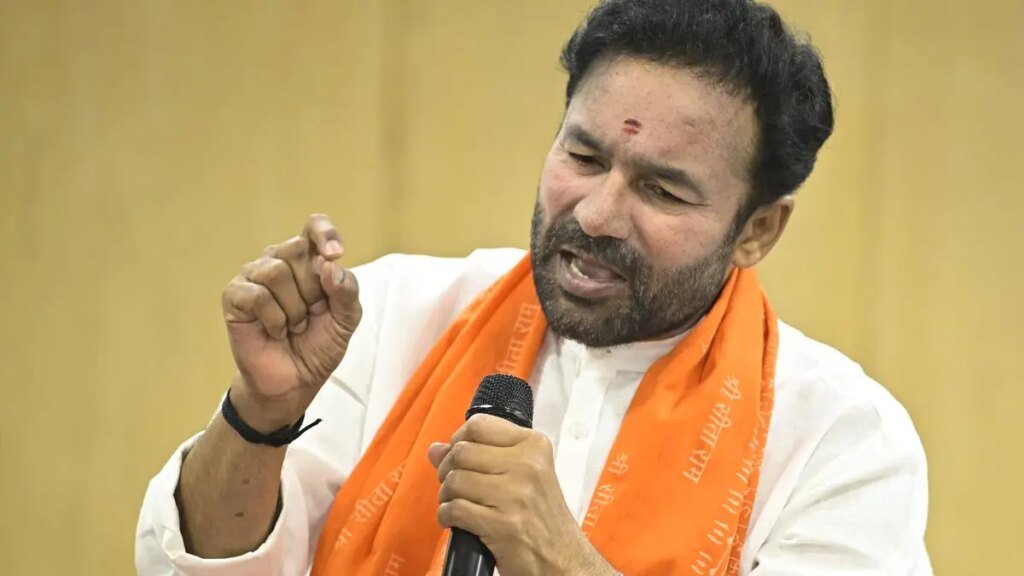
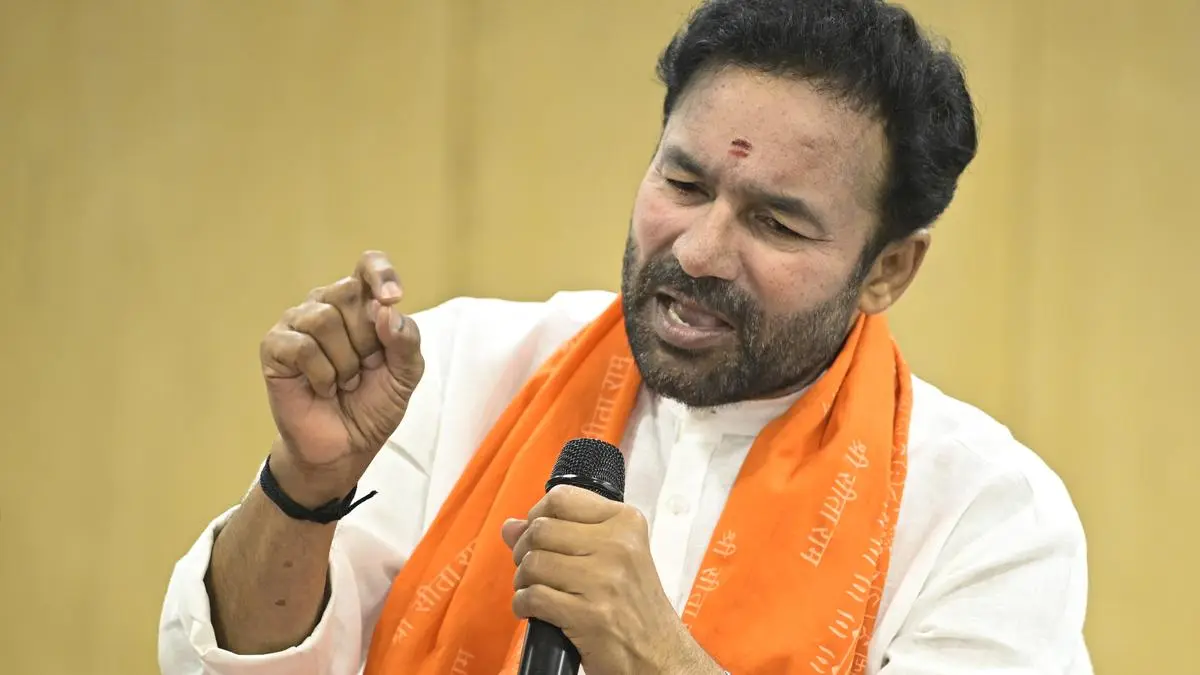
Beyond South America, Africa is emerging as a critical theatre. Zambia has offered India close to 9,000 sq km for geological mapping, G Kishan Reddy, Union Minister of Mines said
| Photo Credit:
SIDDHANT THAKUR
India is fast-tracking its global critical minerals strategy with a multi-pronged push that include securing uranium tie-ups with Russia, Middle East partnerships, and lithium acquisitions as the Centre readies a war chest of over ₹4,500 crore, including overseas acquisitions and setting up emergency stockpiles for critical minerals.
G Kishan Reddy, Union Minister of Mines told businessline that the Khanij Bidesh India Ltd (KABIL), a state-run joint venture mandated to acquire critical mineral assets overseas, has tied up with global heavyweights including International Resources Holding RSC Ltd. (IRH) of the UAE – a vertically integrated mineral company – and Uranium One Group, a subsidiary of Russia’s state-owned Rosatom.
Both entities bring mining and resource security heft, particularly in uranium and rare-earth domains, areas where India is looking to de-risk supply chains.
Simultaneously, KABIL has deepened its consortium approach with Indian PSUs such as ONGC Videsh Ltd (OVL), Oil India Ltd (OIL), and NLC India Ltd (NLCIL), ensuring a blend of domestic financial muscle and international partnerships to mount credible bids for overseas mining assets.
“Under the National Critical Mineral Mission, to encourage the participation of Indian public (Central & State) and private sector companies in the acquisition of assets abroad, the Centre has plans to incentivize the mining, and setting up evacuation infrastructure with appropriate finances of ₹4,000 crore,” the Minister said.
The just-made changes to the MMDR Act during Parliament’s monsoon session make provisions for usage of National Mineral Exploration Trust funds for acquisition of assets overseas. There are plans to up the corpus to nearly ₹8700 crore ($ 1 billion).
Lithium push
India’s hunt for lithium – a critical mineral for EV batteries and energy storage – remains at the center of the strategy.
Following KABIL’s entry into Argentina’s lithium triangle, where it is pursuing three lithium brine assets, the project has now completed non-invasive exploration.
Detailed drilling-led exploration is scheduled to begin shortly, with pre-feasibility and feasibility studies to follow. Officials indicated that metallurgical testing and engineering evaluations will run in parallel, ensuring the venture does not lose time.
Sources said Argentina play will act as a template, with KABIL already advancing due diligence in resource-rich geographies like Australia.
The intent is not just project participation but outright buyouts and joint acquisitions, leveraging the combined balance sheets of Indian PSUs and private partners.
Africa frame
Beyond South America, Africa is emerging as a critical theatre. Zambia has offered India close to 9,000 sq km for geological mapping, Reddy said.
A reconnaissance survey by a joint team from the Geological Survey of India (GSI) and Mineral Exploration Corporation Ltd (MECL) was completed in June 2025 there, opening the door for potential acquisitions in copper-cobalt belts, both critical to EV and renewable energy ecosystems.
Post-Argentina, industry executives point to Australia as the most visible acquisition zones on India’s radar. “Due diligence” in Australia is “on”, the Minister said.
Financing the mission
₹500 crore will be deployed to build a National Critical Minerals Stockpile Programme, a reserve mechanism designed to guard against supply shocks and guarantee mineral availability for domestic industry.
“Guidelines for the stockpile are under preparation,” Reddy said.
The National Critical Mineral Mission is seen as a “strategic shield” that ensures India’s growth in green energy and digital technologies “is not hostage to global supply disruptions”, sources said.
More Like This

Published on August 24, 2025