Almost none of the promises of the NC govt has been fulfilled: Iltija Mufti
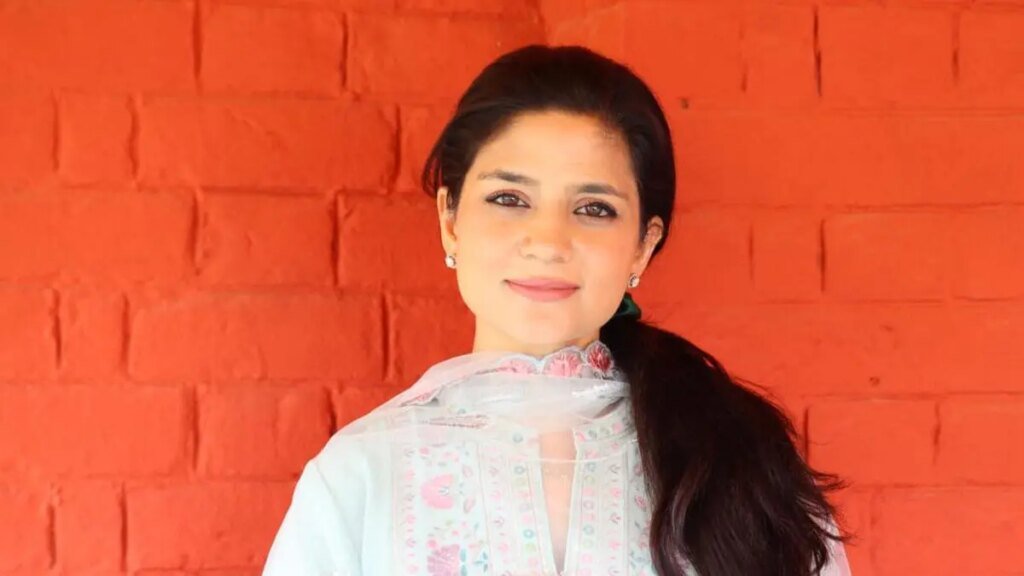
In the aftermath of the abrogation of Article 370, the People’s Democratic Party (PDP) has faced political setbacks. PDP leader Iltija Mufti — daughter of former Chief Minister Mehbooba Mufti — discussed the party’s current role, the relevance of its Self-Rule vision, and her views on the NC-led government and BJP’s promise of statehood.
How is the PDP positioning itself in Jammu & Kashmir’s evolving political landscape?
Since 2019, Jammu & Kashmir (J&K) has undergone a very turbulent phase. Following the abrogation of Article 370, the PDP was severely weakened — many party leaders, including former legislators, MPs and ministers, were driven out of the party. This was part of a broader, systemic attack on the people of J&K.
Yet, I believe the PDP still plays a pivotal role. The PDP emerged at a time when J&K was going through a tough moment. Mufti Mohammad Sayeed, the party’s patron, envisioned not just development but peace with dignity. With that vision, the PDP retains relevance even today.
Do you think it was a deliberate attempt to decimate the PDP?
Of course it was. Which party was made to implode after 2019? Was it the National Conference? No. Every other party seems to have a tactical understanding with the BJP at the Centre. Even the NC, despite winning 50 seats, has gone silent on Article 370. Mehbooba Ji was the last leader to be released after the clampdown in 2019 — because she refused to toe the line.
With the political dynamics transformed after the abrogation of Article 370, do you still see PDP’s Self-Rule doctrine as viable, or a relevant framework?
The PDP’s vision of the Self-Rule model was introduced in 2002, at a time when there was a BJP prime minister. It remains the only framework that does not in any way undermine the Indian Constitution, its sovereignty, or territorial integrity.
Realistically speaking, do you believe there is any chance of Article 370 being restored?
Realistically, none of us imagined even a month ago that we would be on the brink of war. An attack like the one in Pahalgam seemed unimaginable. But in politics, many things happen that catch you off guard. Politics is the art of the impossible. Given the current political environment, the restoration of Article 370 may seem extremely difficult — but what appears impossible today can become possible tomorrow.
How do you view Jamaat-e-Islami’s entry into electoral politics and its alliance with Sajad Lone’s People’s Conference — particularly given Jamaat’s earlier proximity to the PDP?
We live in a democracy, and every political group has the right to forge alliances as they see fit. However, it’s worth noting that several credible voices within Jamaat-e-Islami have publicly distanced themselves from this alliance.
How do you assess the performance of the National Conference-led government during its nine months in power?
If you look at their manifesto, almost none of the promises has been fulfilled. They spoke of rationalising the reservation policy, but there’s been no meaningful progress. We did stage a protest outside the CM’s residence, which put some pressure on them and they have promised a report within six months. But even after that deadline, nothing has materialised. Likewise, promises of providing one lakh jobs and free gas cylinders have remained just that — promises. There has been no delivery on the ground.
Do you believe that the presence of a dual power structure — between the elected government and the Lieutenant Governor (LG) — is adversely affecting governance in Jammu & Kashmir?
Absolutely not. Look at the records when you had a full statehood and had Farooq Sahab and Omar Sahab as Chief Ministers; they were always inept. Reams and reams of papers have been written about how inefficient Farooq sahab was as an administrator even in the eighties when Kashmir was on fire.
They had different priorities. Dual power structure has become a convenient excuse for the elected government. LG sahab has rightly said that only the police are under him and I don’t understand what stops them from doing other things. All the departments, barring law and order, are under the elected government.
In your view, is the BJP government likely to restore statehood to J&K anytime soon? Or is it being used merely as a political promise?
I’m not sure. They keep saying it will happen when the time is appropriate, but they never clarify what that actually means. Does it imply that the ‘appropriate time’ is when a BJP Chief Minister is installed?