US Stablecoin Law Sends Ripples To India: How New Dollar-Backed Era Challenges Financial Sovereignty | World News

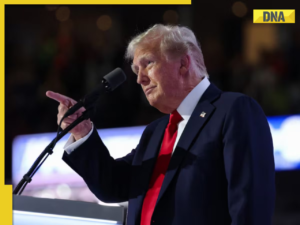
New Delhi: A signature in Washington has stirred up serious questions in New Delhi. When US President Donald Trump signed the GENIUS Act into law, it kicked off a shift that could redraw the global financial map in addition to giving a greenlight to dollar-backed stablecoins. What looks like a domestic crypto law is now reverberating in central banks, fintech firms and policy circles around the world, especially in emerging economies like India.
The Act, at its core, gives formal structure to stablecoins that are pegged to the US dollar. It demands full reserve backing, regular audits, KYC checks and anti-money laundering protocols. All the ingredients of traditional finance now wrapped around a digital asset. With this one move, the United States has set the tone for a new generation of money – which is private, programmable, borderless and unmistakably dollar-based.
Stablecoins like USDC (a regulated digital currency) and USDT (a blockchain-enabled platform) were already popular. Now they have the seal of legitimacy. It is no longer a crypto trading tool but emerging as real-world instruments of exchange.
Payment platforms, remittance services, e-commerce firms and even small traders could begin using them as alternatives to banks. What is being built is a parallel channel as well as a potential competitor to traditional money systems.
India is paying attention. Officials at the Reserve Bank of India know what this means. The efficiency of stablecoins is attractive. Instant cross-border payments, cheaper remittances and faster settlements are something that the traditional banking network has struggled to deliver. India’s vast fintech ecosystem, from UPI to Paytm, is built for scale. But scale may not be enough.
Dollar-based stablecoins could sneak into India’s economy in invisible ways. Exporters and importers could begin settling trades using them. Freelancers and tech workers might accept payments in digital dollars. And slowly, the rupee could lose its grip in corners of the economy where the RBI once ruled without question.
Behind the scenes, policymakers are nervous. Stablecoins can be hard to track. Their mobility makes them hard to tax. And when demand for digital dollars rises, local currencies can take a hit. What the Bank for International Settlements (BIS) calls “cryptoisation” is not merely a theory anymore, it is a warning. If this parallel system gains traction, India’s central bank tools, which are interest rates, liquidity controls and capital flow regulations, might not be enough.
The RBI has its pilot projects for the e-rupee. They are promising. But the competition is not waiting. The United States is moving fast. It may not have a digital dollar yet, but it has something just as powerful.
For India, the road ahead is foggy. One option is to create a strong rupee-backed stablecoin that can compete on global platforms. Another is to impose strict controls on foreign stablecoins before they embed themselves too deeply. And third is to find a middle ground that supports innovation while protecting the core of monetary policy.
The stakes are economic and geopolitical. The GENIUS Act is about control. If the old world was built on petrodollars and treasury bonds, the new one may run on digital tokens that carry the stars and stripes. Every stablecoin minted under U.S. regulation is another extension of its soft power.
Meanwhile, Europe is working on a digital euro. China is expanding the e-CNY. And in parts of Africa and Southeast Asia, gold-backed and commodity-tied tokens are being tested. The world is preparing for the next phase of money. But the United States has already made its first big move.
India must decide soon. Will it shape its own path, or will it play by rules written elsewhere? One thing is certain – the dollar is not retreating. It is evolving. And it is not knocking on the door anymore. It is already inside the house.