
Hof University students create floating islands to purify water
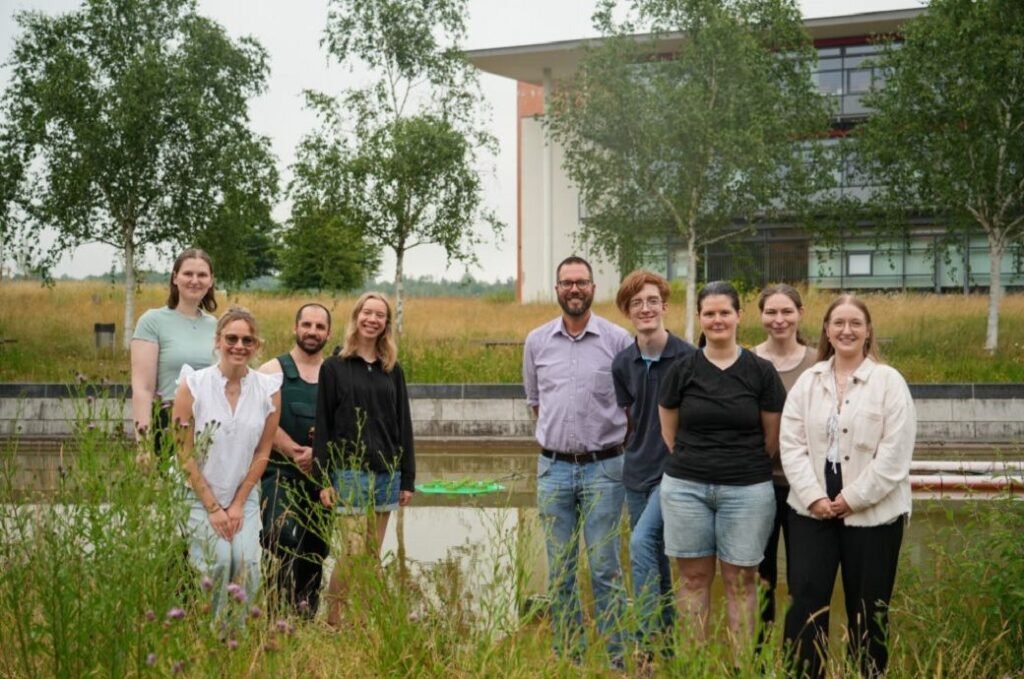
In just ten weeks, nine bachelor’s and master’s students put their ideas into practice. The aim of the project was to combine plants, textiles and technology in order to further develop so-called ‘blue-green infrastructure’ – natural elements in cities such as parks, green roofs or rainwater reservoirs that contribute to the quality of life in addition to their function.
As part of Hof University’s ‘AquaTex’ project, students developed two floating islands using special textiles to purify water and support plant growth.
Guided by Dr Harvey Harbach, the team used 3D printing, lab testing, and collaborative teamwork to create sustainable solutions for water purification and retention.
One island is already installed on campus.
The project was supervised by Dr Harvey Harbach from the university’s Institute for Sustainable Water Systems (inwa). His research group has been developing floating islands for years that do more than just look good.
“We want to design rainwater retention basins in such a way that they not only store water, but also clean it – and can even support plants for food or animal feed production,” said Harbach.
The project used a special textile that can purify the water and reduce water pollution. The students grew watercress from seeds, tested the materials in the laboratory, developed floating bodies using a 3D printer and tested their designs in real bodies of water. They were supported by technicians from the university and the modern equipment in the MakerSpace, the workshop for inventors and developers on the Hof University campus, as well as the laboratories at the Münchberg site.
The project was carried out as part of the ‘Management of Project Groups’ and ‘Project Management Basics’ modules at Hof University of Applied Sciences and was organised into three teams – for planting systems, textile components and floats. Each group started with independent research. In the design phase, the ideas were bundled, critically scrutinised and brought together.
“We have learned that successful teamwork doesn’t mean doing everything together – it means coming together in a well-coordinated way at the right time,” said Aleka Briese, project manager.
Fibre2Fashion News Desk (RR)