Venus, Jupiter Converge in Stunning June 9th Dusk Conjunction
Bob King
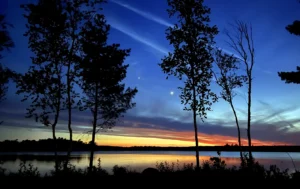
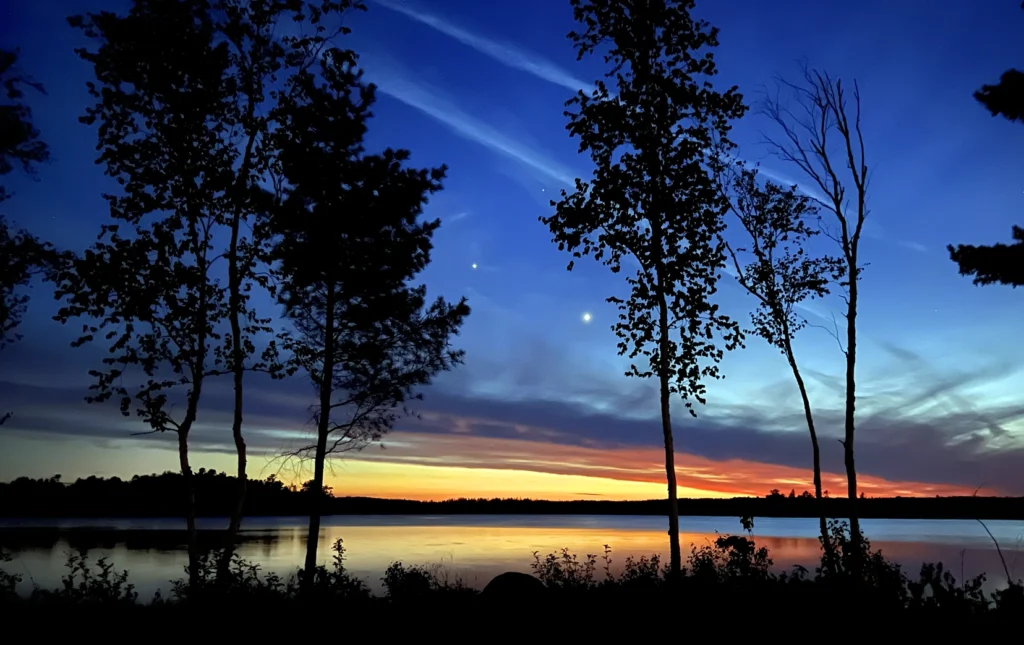
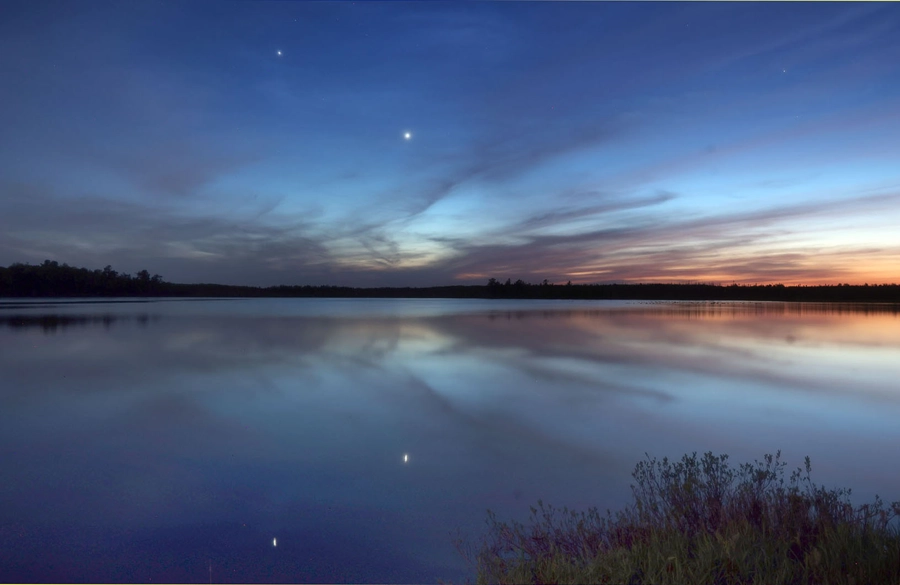
Look west at dusk and be amazed! Two bright “stars” — Venus and Jupiter — have been approaching each other for weeks. They’ll soon be face to face. On June 9th just 1.6° will separate them, a little more than your pinkie held at arm’s length. Both are really bright, which means anyone can watch the show, including residents of big cities. Just find a slice of open sky to the west-northwest and look anytime from 45 minutes to 2 hours after sunset. The kissing planets will stand one to two balled fists above the horizon, depending on the time you view them.
Bob King
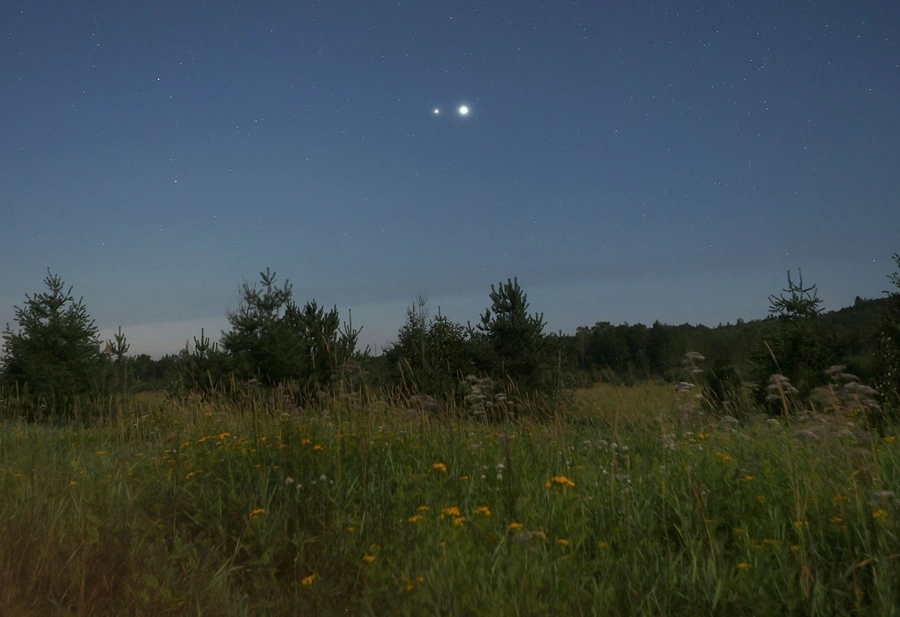
Conjunctions of Venus and Jupiter occur infrequently. The last one occurred in August 2025, at the start of dawn when most people were asleep. A lot more of us will witness their upcoming meet-up because this time it occurs at a friendlier hour. The two brightest planets will rendezvous again on August 25, 2027, but they’ll be too close to the Sun for viewing. Our next opportunity to see them as a couple won’t happen until November 10, 2028, at dawn.
Simple equipment
Bob King
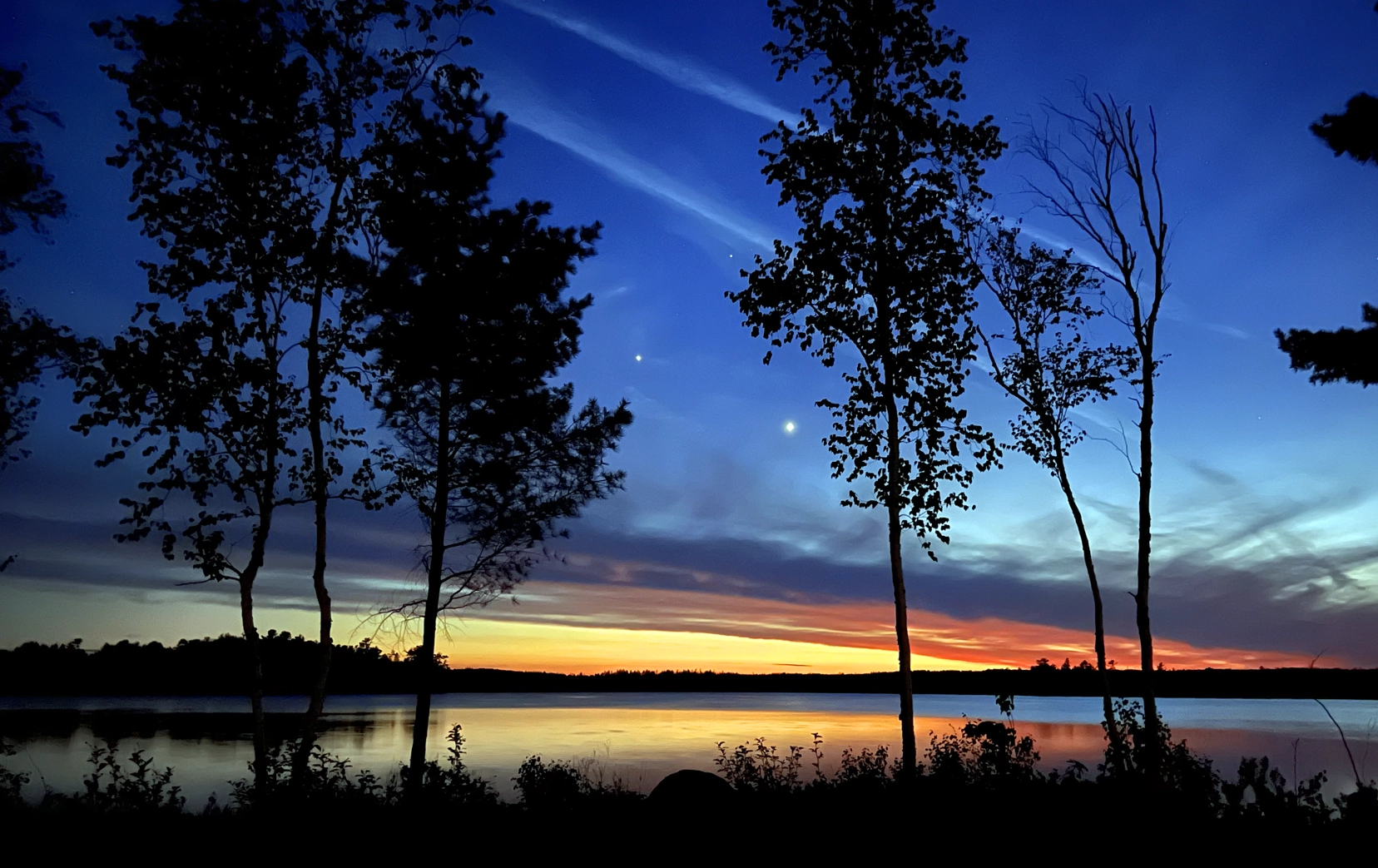
Feel free to use binoculars. Both planets will fit in the same field of view, and you might be able to spy several of Jupiter’s brighter moons. A small telescope will reveal the gas giant’s cloud belts and Venus’s gibbous phase. But to be honest, this cosmic performance is best enjoyed without magnification. Just use your eyes.
Like you, I’ve been savoring the planets’ slow but inexorable convergence. Anticipating the big event is half the fun. Nature excels at extending pleasure through delay, the better to savor the pinnacle experience. If you haven’t already boarded the “conjunction train,” get on now and enjoy the ride.
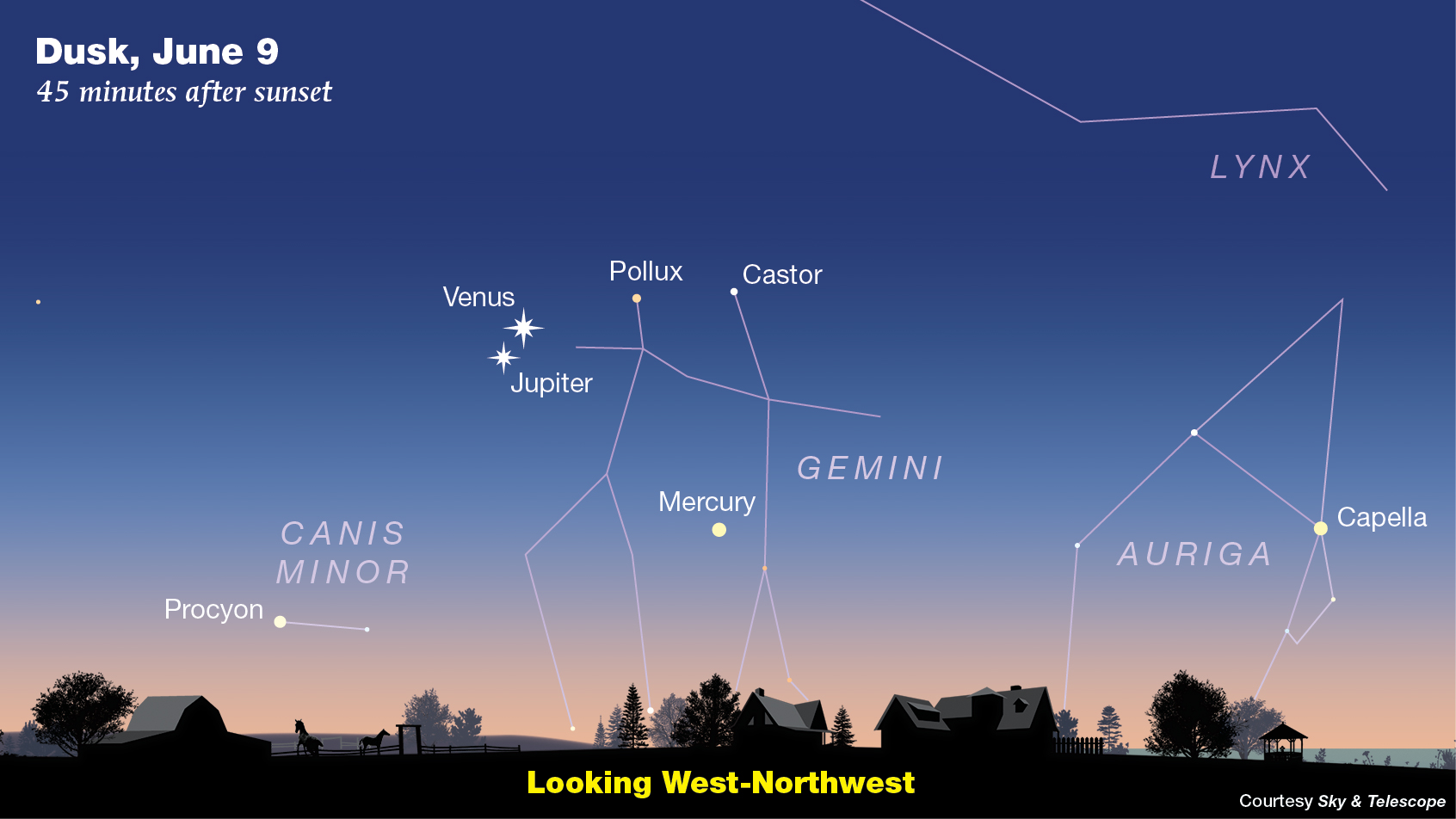
Sky & Telescope diagram
Although Jupiter and Venus will squeeze closest together on June 9th, they’ll be nearly as tight (1.7°) on June 8th and hang within 2.5° of each other from June 7–10. Their proximity means we’ll see their relative positions change noticeably from night to night. Keeping an eye on the shifting pair will reveal not only how Venus and Jupiter move in their orbits, but also how Earth plays a role in bringing the two worlds together. Let’s take a closer look.
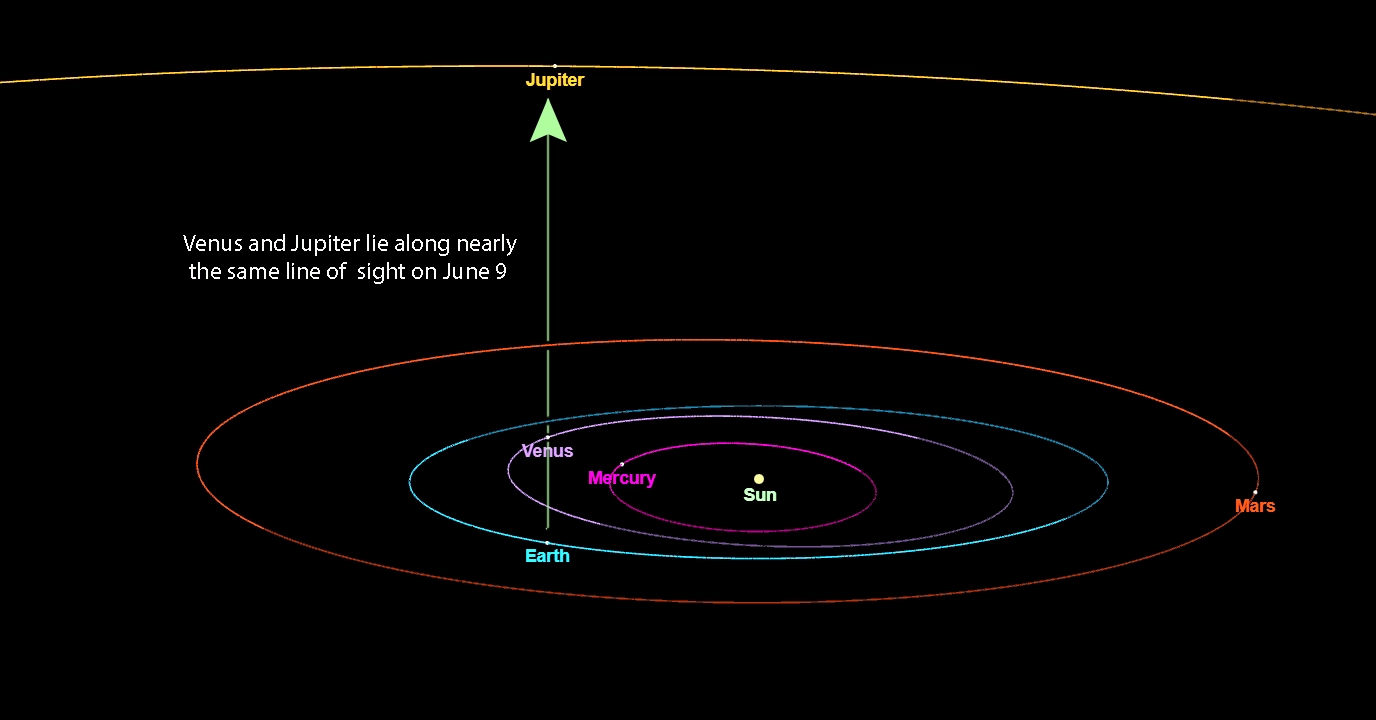
JPL HORIZONS with annotations by Bob King
Oh, the tangled orbits they weave
Earth’s orbital motion causes the Sun to move slightly less than 1° per day eastward against the background stars. Both Jupiter and Venus are also moving east in their orbits, as if trying to stay ahead of the Sun. Jupiter currently chugs along at about 12′ per day, while Venus sprints six times faster, covering 1.2° per day.
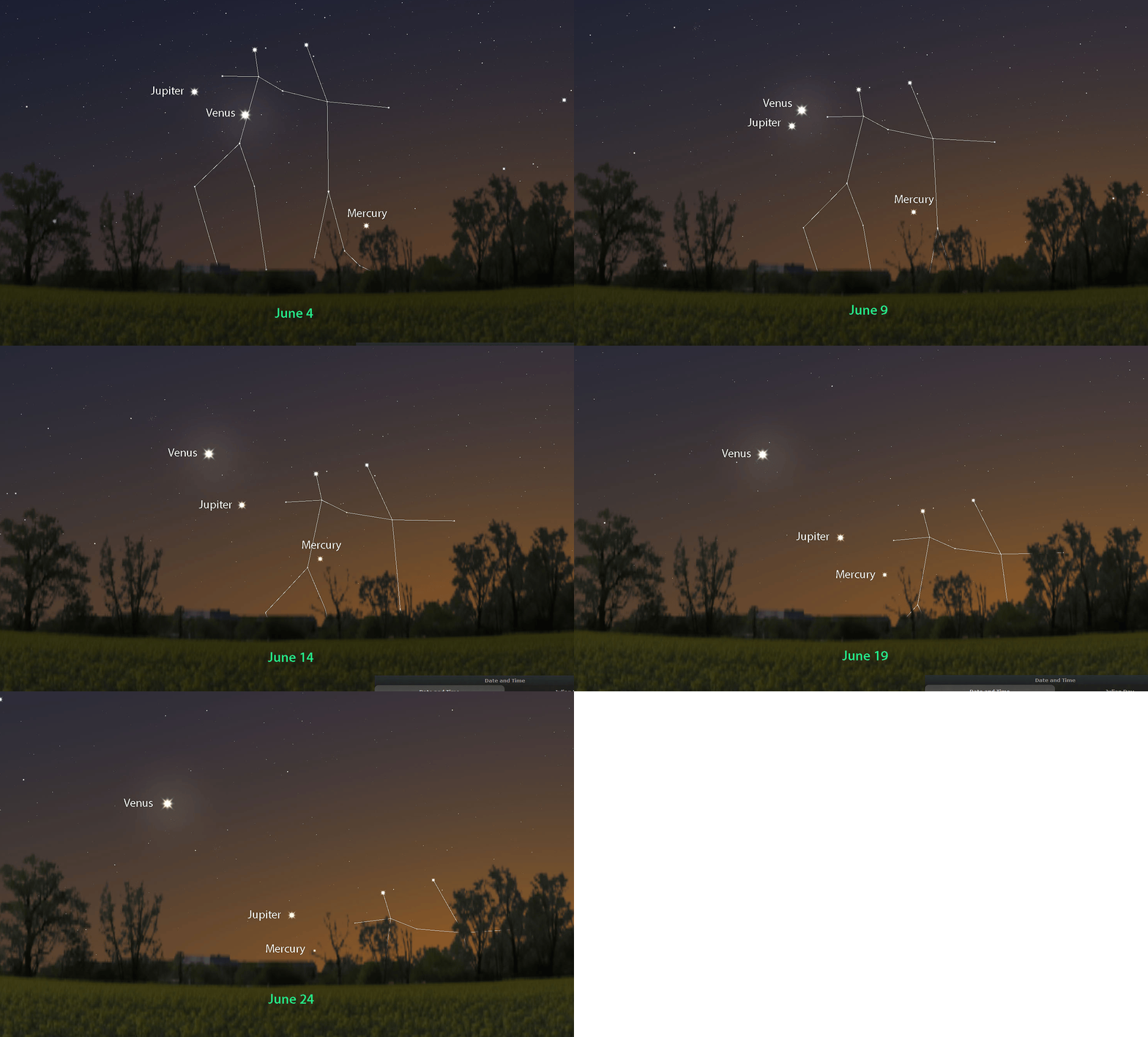
Stellarium with annotations by Bob King
Venus is a much speedier planet than Jupiter because it’s closer to the Sun. On average, its apparent motion relative to the background stars is approximately 1°, much like the Sun’s. At its current distance from Earth of 187 million km (116 million miles), Venus moves about 1° to the east per day. The planet is also currently moving away from the Sun — its solar elongation is increasing by 0.2° daily. Add that to 1° and you get a total of 1.2° per day. Venus easily stays abreast of the Sun and then some through its own orbital motion plus increasing solar elongation.
Jupiter is far away, about 900 million km (560 million miles), and circles the Sun at a comparative crawl. It can’t outrun our star like Venus can. Instead, its solar elongation decreases by 46′ per day — much more than its eastward motion can make up for. Put another way, most of Jupiter’s apparent movement is due to Earth’s motion. Unable to keep pace, it drops westward at a rate of about ½° (one full-Moon diameter) a day. On July 29th, the Sun will overtake it in conjunction.
Look who’s joining the party
As if the Venus-Jupiter pairing isn’t wonderful enough, Mercury also drops by. It crossed into the evening sky late last month and will shine at zero magnitude about 12° (a little more than a fist) to the lower right of the featured couple. To see it, you’ll need an unobstructed view toward the northwestern horizon. Mercury is fainter than Venus because it’s 2½ times smaller, farther away from Earth, and lacks clouds. Clouds are excellent reflectors of sunlight, and they fully enshroud Venus and Jupiter — a key reason they both appear so bright. Take along binoculars to make sure you spot furtive Mercury.
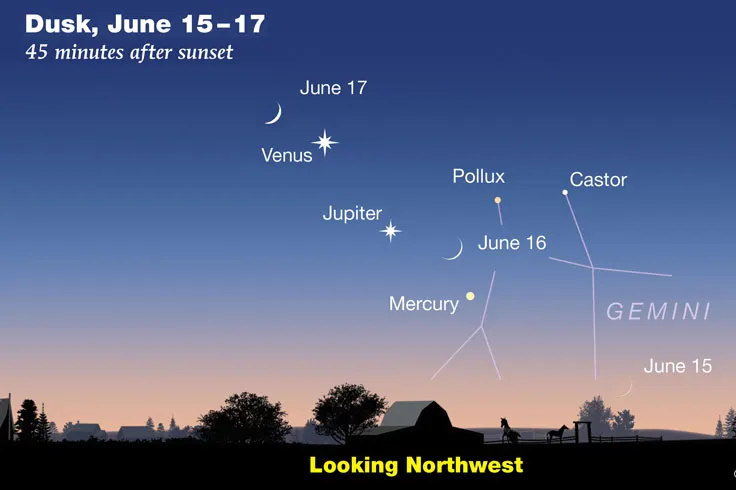
Sky & Telescope
Nor is the twilight performance complete after June 10th. The thin, 2.5-day-old lunar crescent joins the planetary trio on June 16 and 17 in an equally spectacular alignment. Our eyes may burst with joy this month!