NASA’s Psyche Sends Back Amazing Images of Mars
NASA / JPL-Caltech / ASU
Sometimes, with careful planning, the solar system gives missions a free kick on the way towards their ultimate goal. Just such a gravitational assist occurred recently, when NASA’s mission to the asteroid 16 Psyche flew past Mars.
The eponymous mission swung by Mars on May 15th, passing 4,609 kilometers (2,864 miles) distant. This flyby was the only gravitational assist for this mission.
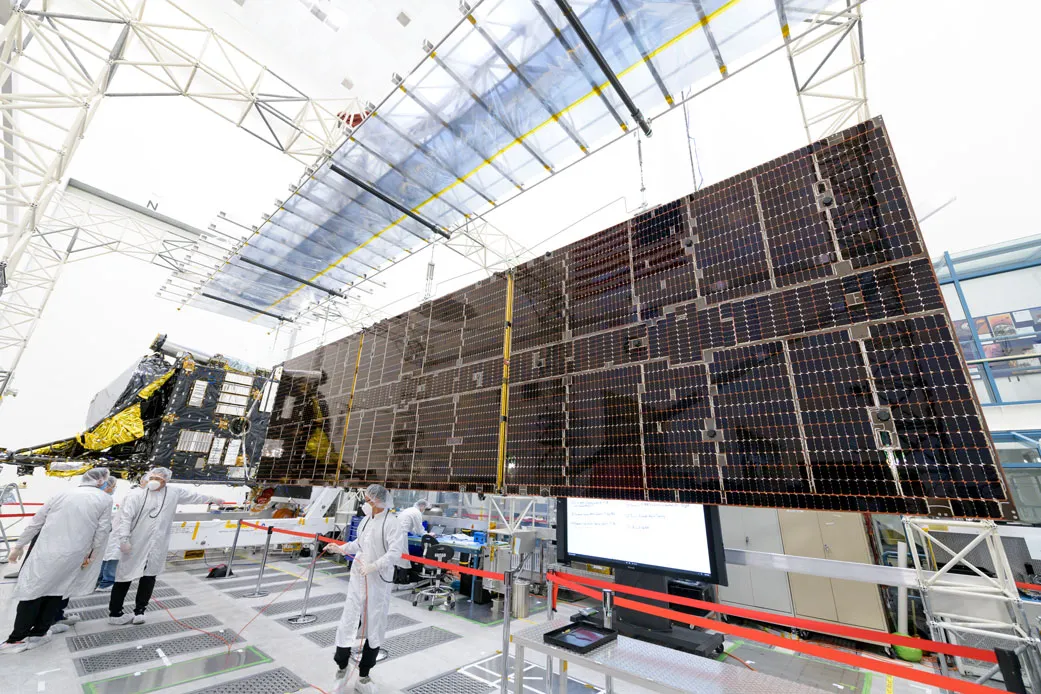
Flybys provide a boost to interplanetary exploration, without requiring the use of precious onboard propellant. Psyche is equipped with two large solar panels and uses four thrusters (xenon-fueled ones that utilize the Hall effect) for maneuvering.
NASA / JPL-Caltech
Tracking Psyche
NASA’s worldwide Deep Space Network followed the mission throughout the Mars flyby, ensuring it’s in good health and on track towards its final destination. The flyby gave Psyche a kick of 1,000 miles per hour and tweaked its orbital inclination around the Sun by an extra degree. (The asteroid 16 Psyche has orbit inclined more than 3 degrees relative to the ecliptic plane, along with the planets orbit.)
The flyby also gave mission controllers a chance to test instruments and perform a dress rehearsal for the mission’s arrival at the asteroid. It was all hands on deck during the spacecraft’s approach and flyby, as Psyche powered up its magnetometer, neutron and gamma-ray spectrometers, and imagers during the event.
What Psyche Saw
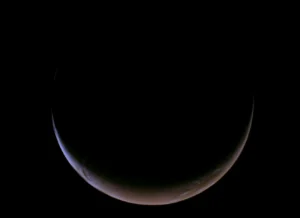
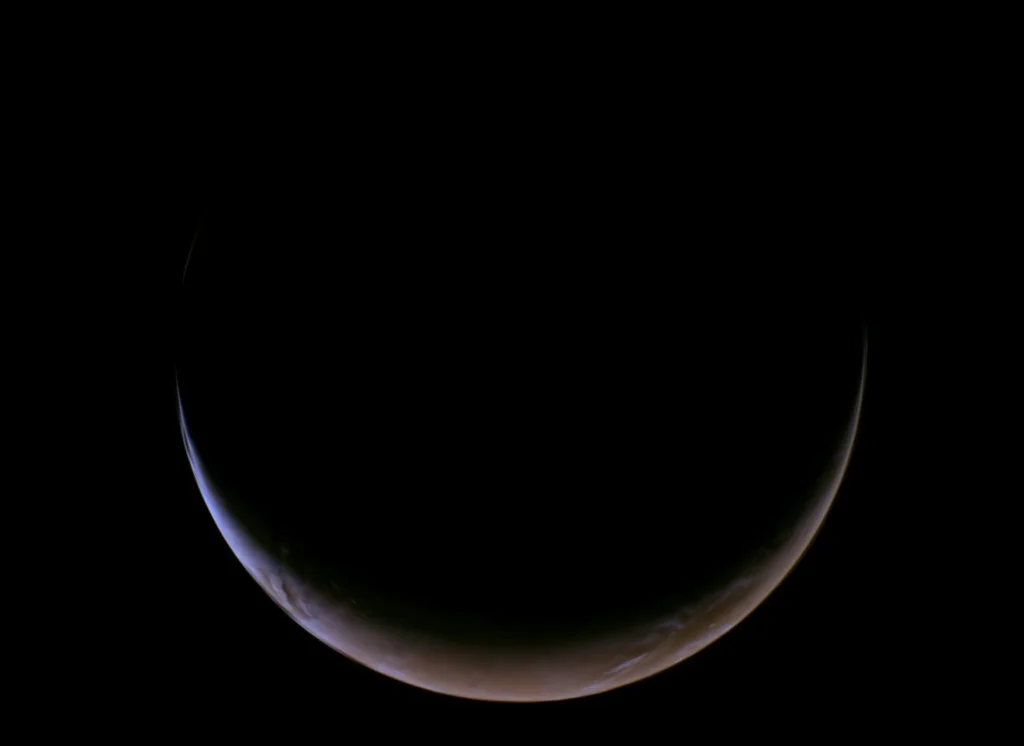
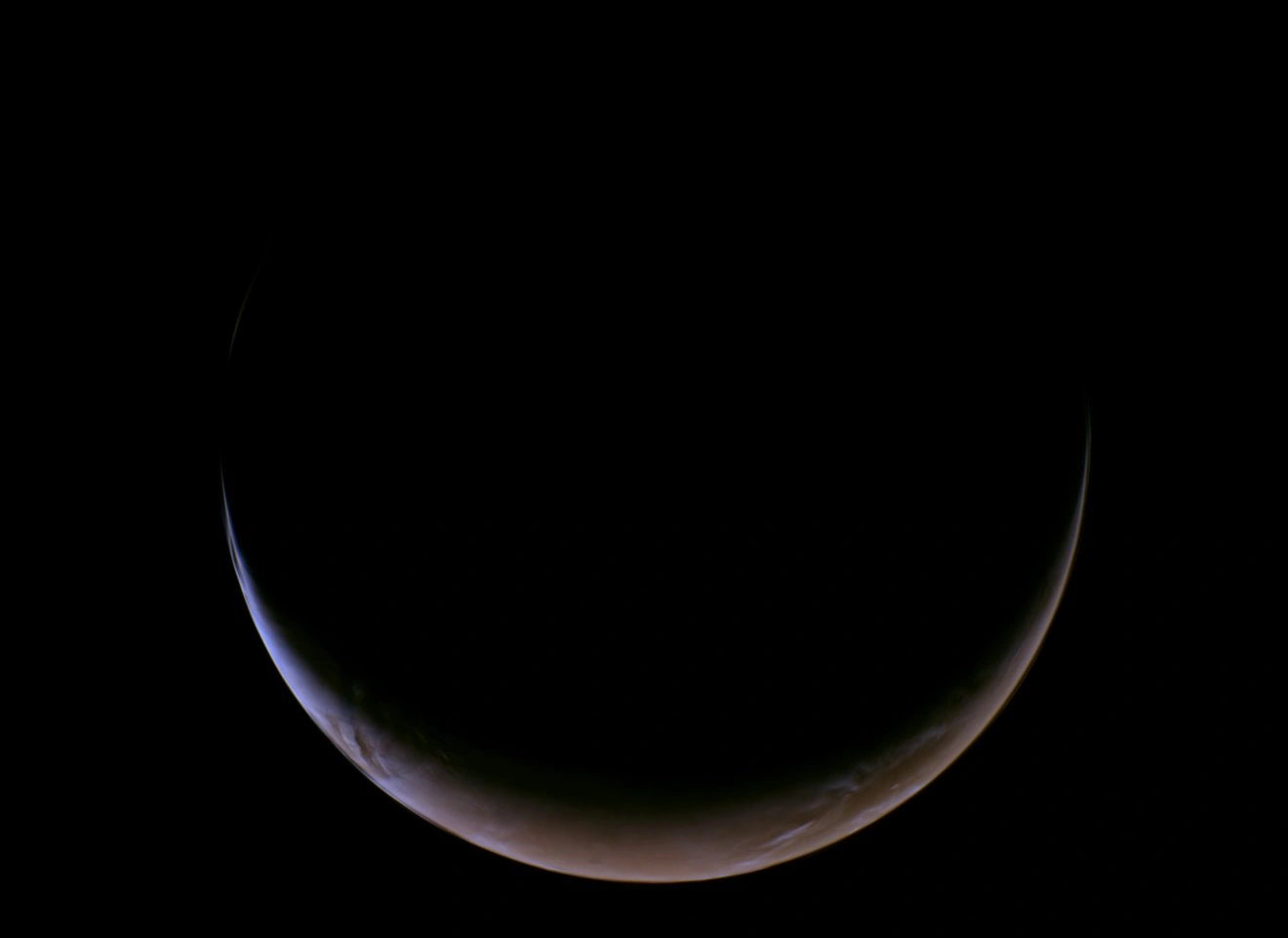
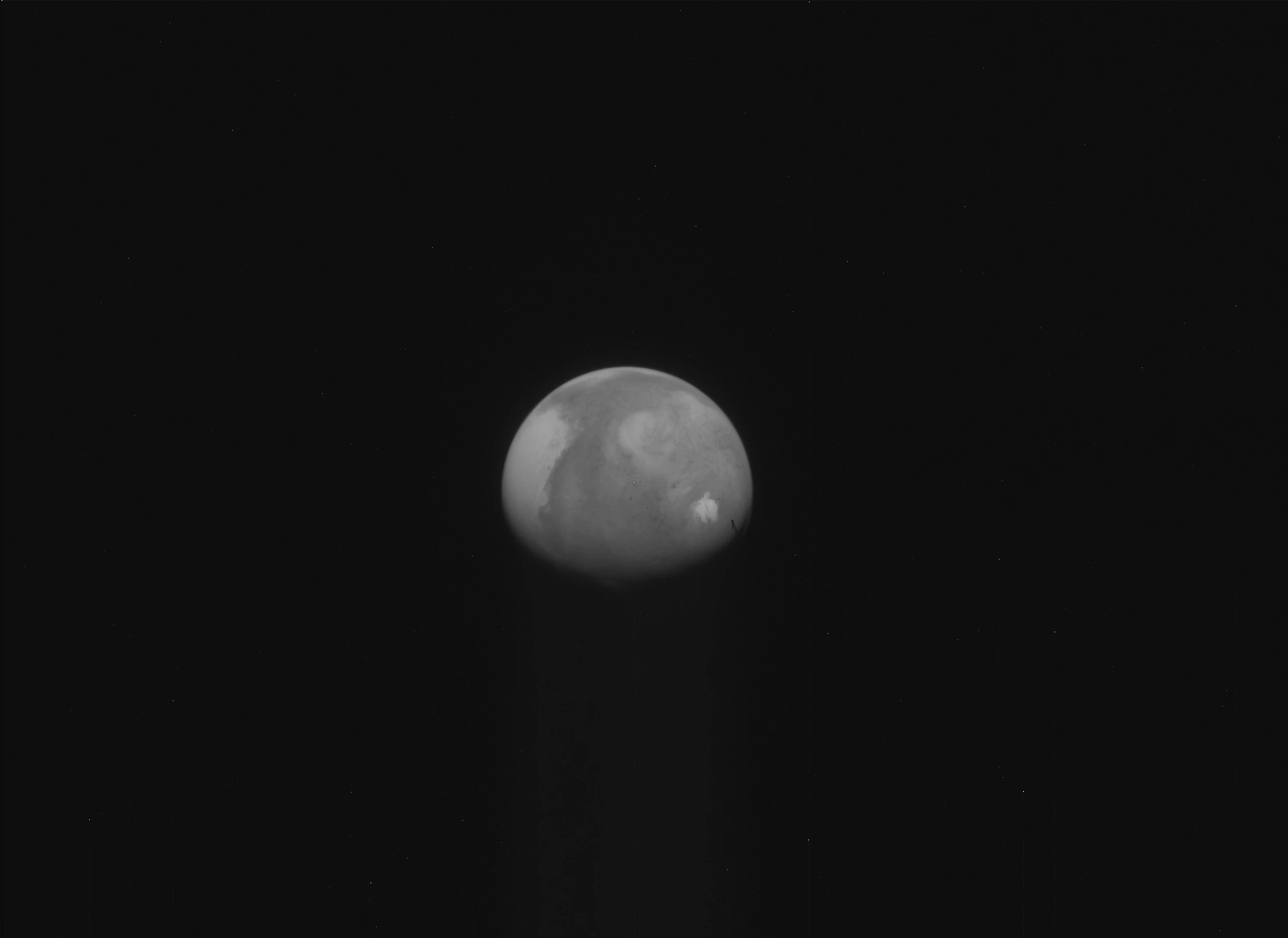
Psyche approached Mars from a nearly anti-sunward direction, showing us a view of the crescent Red Planet never seen from Earth. The southern pole cap was prominently in view. It’s currently summer season in the Martian southern hemisphere, so the ice cap was smaller than it would be during the winter season. The high phase angle approach also meant that the slim crescent of Mars swelled rapidly in Psyche’s view, becoming a more familiar ‘gibbous Mars’ as the spacecraft receded.
NASA / JPL-Caltech / ASU
“We captured thousands of images of the approach to Mars and of the planet’s surface and atmosphere at close approach,” says Jim Bell (Arizona State University) in a recent press release. “As the spacecraft continues its journey after the flyby, we’ll continue calibration imaging of Mars for the rest of the month as it recedes into the distance.”
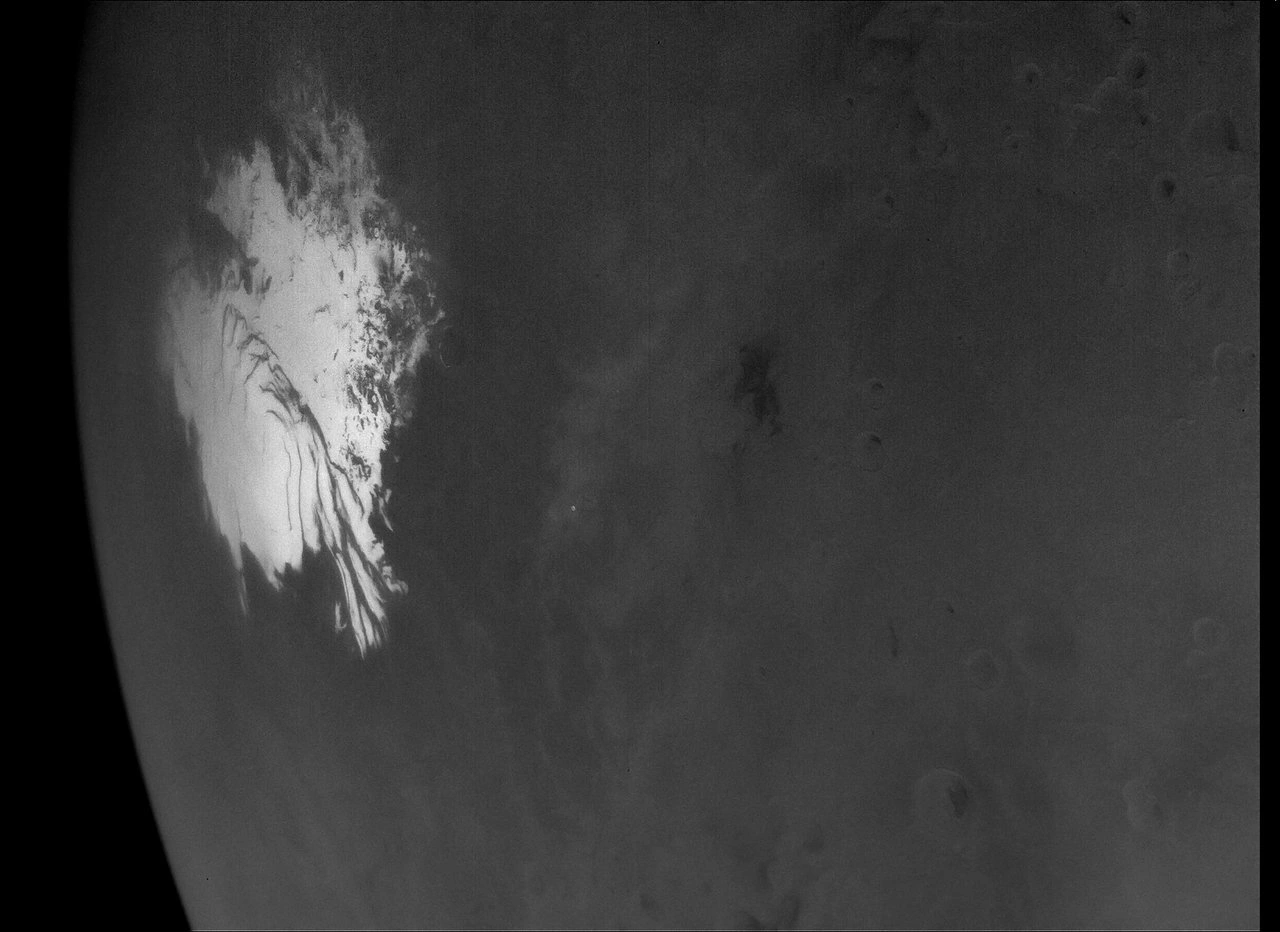
NASA / JPL-Caltech / ASU
The mission also took measurements via its spectrometers and magnetometers as it crossed though the planet’s bow shock. Though Mars does not presently possess a global magnetic field, solar wind still interacts with the planet’s ionosphere and exosphere.
The mission conducted a wide-survey scan for the Martian moons Phobos and Deimos during the flyby, but there’s no word as of yet if images picked up the tiny moonlets. The search serves as a good practice run for the mission’s arrival at 16 Psyche, since tiny moons are a common feature among asteroids. There’s a good chance that 16 Psyche may possess yet-to-be discovered companions.
“We’re still analyzing data as it gets downloaded, but so far, everything looks great from all instruments,” says Lindy Elkins-Tanton (UC Berkeley Space Sciences Laboratory). “The team is very pleased!”
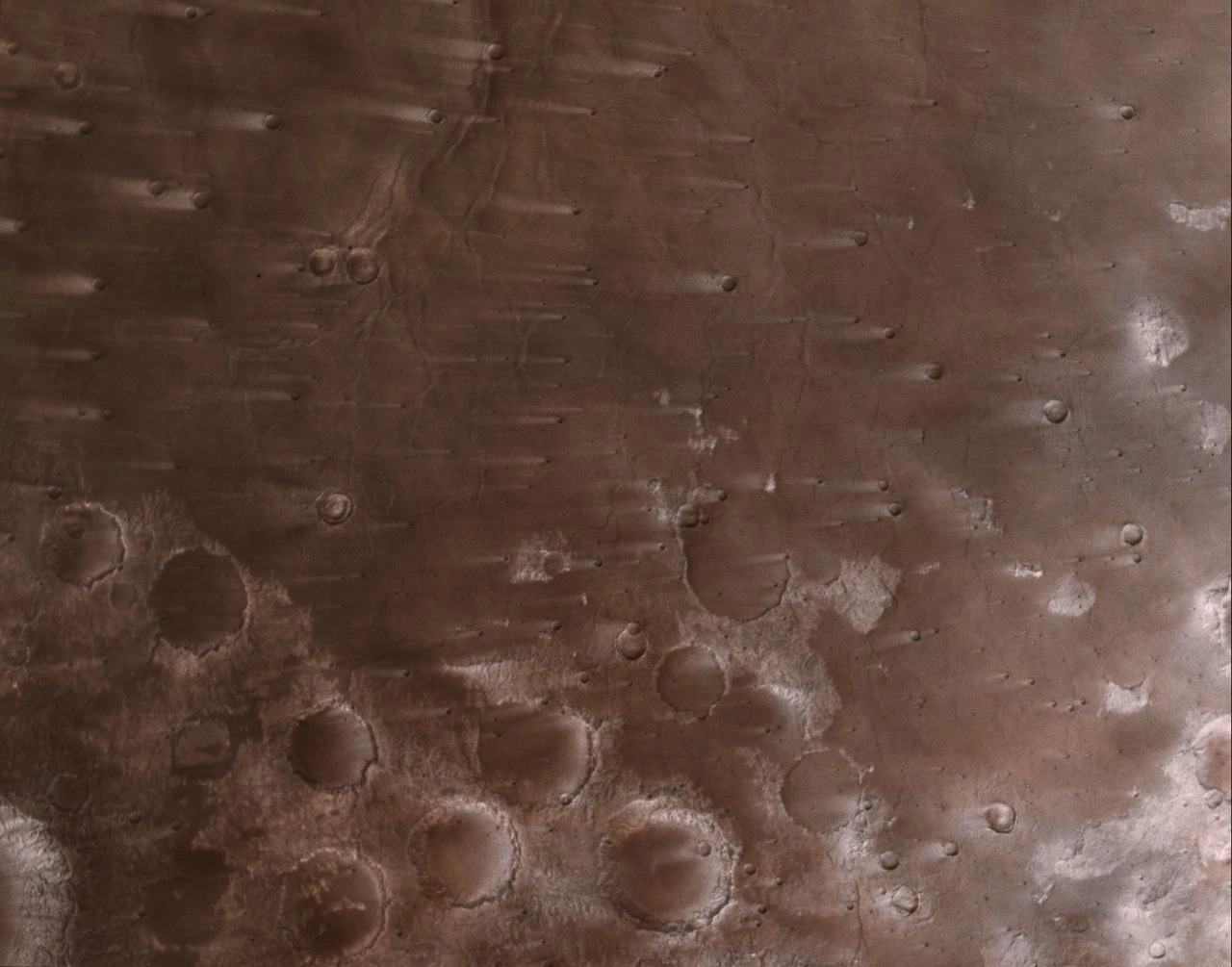
NASA/ JPL-Caltech / ASU
Psyche’s observations supplement the data being gathered by active missions on and around Mars, including the European Space Agency’s ExoMars Trace Gas Orbiter and Mars Express as well as NASA’s Mars Odyssey, Mars Reconnaissance Orbiter, and Curiosity and Perseverance rovers on the planet’s surface.
You can see all the raw images from Psyche’s flyby here.
Next stop: 16 Psyche.
The mission will arrive at the asteroid in August 2029, though the first distant images of 16 Psyche will begin coming in starting in May that year. At about 280 kilometers in diameter, 16 Psyche was discovered by astronomer Annibale de Gasparis as he was observing from the Naples observatory on March 17, 1852. The metallic asteroid seems to be a dense remnant core of a planet that never came to be. Studying such a relic could provide insight into how larger planets formed, and why smaller worlds like 16 Psyche didn’t grow further.
The mission is now on a steady cruise of discovery, with Mars receding in its rear view. It’ll be exciting to get our first good views of 16 Psyche in three years’ time, as the mission probes a new corner of the solar system.