
Govt plans new blueprint to put the wind back in the sails of the sector
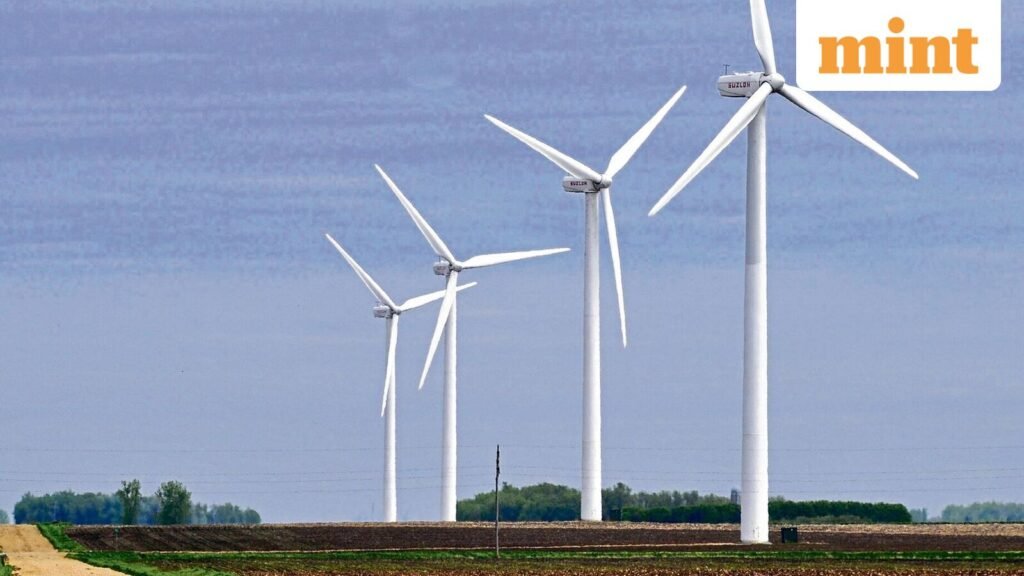
NEW DELHI: The Union government is working on a blueprint to revive the once-buoyant wind power sector by addressing vexed issues plaguing the space. These include the lack of grid connectivity, land acquisition problems, unsigned power purchase agreements (PPAs), improper scheduling and forecasting of wind energy, lack of coordination between states, and distribution companies not procuring electricity from renewable energy projects, said three people with knowledge of the development.
The government will also look at repowering the wind sector by modifying and replacing old wind plants as it aims at achieving 100 gigawatts (GW) of wind power capacity by 2030, they said.
Currently, India has a wind capacity of 53 GW, which accounts for 10.5% of India’s installed power generation capacity of 505 GW. With wind power lagging over the past few years amid falling wind speeds in the country and a slowdown in capacity addition, a task force of officials from the ministries of new and renewable energy (MNRE) and power and the wind energy industry has been planned to look at the issues and prepare the much-awaited revival roadmap.
Wind energy projects worth ₹60,000 crore are currently stalled, making up 10 GW of the 43 GW in renewable energy capacity still awaiting signed PPAs, Mint reported earlier.
“In a meeting organized by MNRE on 12 December with wind sector players, developers and EPC (engineering, procurement and construction) companies, the ministry discussed the planned task force and its terms of reference. Grid issues, land acquisition and coordination with the state governments have emerged as the key issues which the task force would look at,” one of the three people said, adding that the task force’s terms of reference are yet to be finalized.
During the meeting, the industry participants suggested setting up a web portal to track the progress of wind power projects along with updates on regulatory approvals and project implementation, a government official said, requesting anonymity.
Endangered birds
“The proposals are under deliberation and consultation are ongoing,” the official said.
The issue of protection for the Great Indian Bustard and the delay in approvals for transmission and renewable energy projects in Rajasthan and Gujarat since 2021 have also impacted the sector. Concerns have been raised over the threat to the Great Indian Bustard, an endangered low-flying species of birds that may collide with wind turbine blades and high-voltage power lines.
Queries mailed to the MNRE remained unanswered till press time.
Experts said land acquisition and grid connectivity are the major impediments to the wind energy sector.
“When the bidding model was changed to reverse bidding, it impacted the wind power space. Further… there is a requirement for several patches of land involving different landowners, which is a major roadblock,” said MP Ramesh, former director–general at the National Institute of Wind Energy, a research and development institute under the MNRE.
Amit Kumar, partner and leader, energy and renewables industry, at Grant Thornton, said there have been instances when developers have acquired land but were unable to proceed with a project because of lack of feasibility or grid connectivity.
“There is a need to re-energise the sector. Component manufacturing should also be looked into. India already has a substantial wind component manufacturing capacity. However, efforts should be made to enhance competitiveness and develop products like magnets in the country,” Kumar said
At the Global Wind Day conference in June, MNRE minister Pralhad Joshi said that to fully unlock national wind potential, a coordinated national push is needed. He said the government is prioritizing expansion into Madhya Pradesh, Telangana and Odisha for wind power and launching the offshore sector with 4 GW of leased areas identified in Gujarat and Tamil Nadu.
Joshi said the government is looking at integrating wind into round-the-clock and firm green power strategies through storage-linked business models, modernizing the grid, and investing in AI-based forecasting to manage variable renewable energy.
Mint reported earlier that the government is looking at launching a new weather forecasting system for renewable energy, which would help in projecting wind speeds.