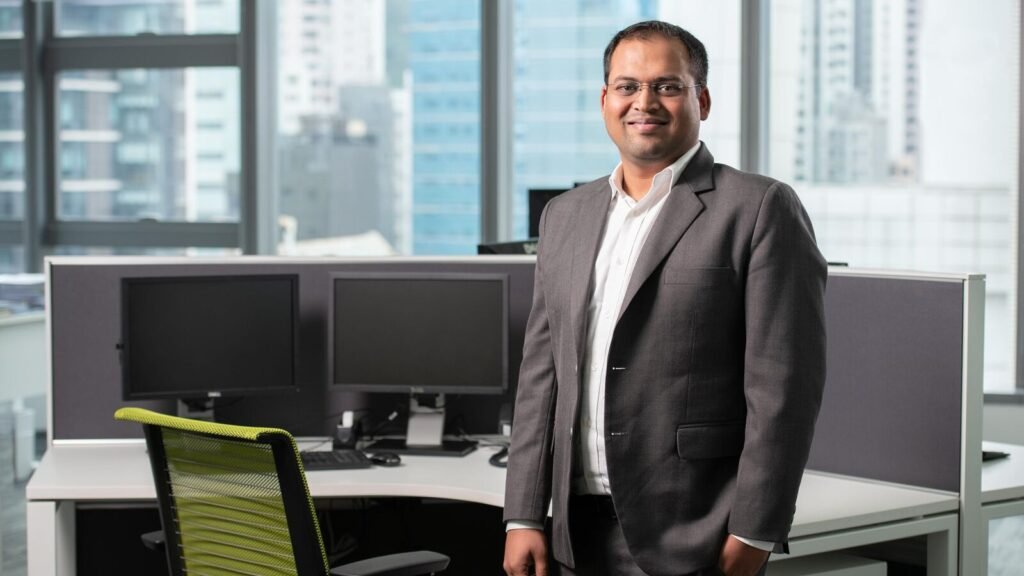
India’s appetite for continuation vehicles likely to keep growing, says MD of TPG NewQuest
A CV typically helps investors hold on to successful portfolio companies, or trophy assets, that need time beyond the fund’s life cycle to reach their full potential.
CVs represent the evolution of the secondary market and are a type of general partner (GP)-led transaction. Traditionally, the most common type of secondary deal is an LP-led transaction, in which a limited partner sells their stake in a fund to another investor.
A CV, however, allows for a newer, specialised type of secondary transaction that lets GPs retain control over prized assets. Instead of a limited partner (LP) selling an asset to a third party, the GP of a fund sells a high-performing “crown jewel” asset from an old fund into a new vehicle that they also manage, which is the CV.
An emerging trend
“While multi-asset CVs have gained significant acceptance in India already, as the market deepens from a buyer and seller’s perspective, we believe that single-asset CVs will also gain traction in India in the coming years,” Sugla said.
“In developed Western markets, primarily Europe and the US, single-asset CVs already constitute a large portion of GP (general partner)-led market volumes and there is no reason why this will not happen in Asia,” he added. The bulk of current conversations in India, however, remain around multi-asset CVs.
Sugla explained what’s needed for the market to eventually get there. “The market needs to become confident that there are enough buyers for a single asset. Today, we are seeing multi-asset CVs because GPs are confident they will get four to six bids if they construct the vehicle right,” he said.
Sugla’s comments come as prominent private equity players in India have launched or are launching these sophisticated vehicles amid a broader liquidity crunch. Last month Mint reported that Kedaara Capital was in talks to raise a $200-300 million CV to keep backing at least two of its trophy assets.
Multiples announced a $430-million CV earlier this year to extend its investments in Vastu Housing Finance Corp. Ltd, Quantiphi Analytics Solutions Pvt. Ltd, and APAC Financial Services Pvt. Ltd. The CV was backed by HarbourVest Partners, Hamilton Lane, LGT Capital Partners, and TPG NewQuest.
In 2024, ChrysCapital announced a $700 million CV anchored by HarbourVest Partners LLC, LGT Capital Partners Ltd, Pantheon Ventures (UK) LLP, and other investors.
Mint reported last year that venture capital firms IndiaQuotient, Kae Capital, Lightbox India Advisors, and WestBridge Capital Management had also noted the trend and were considering similar moves.
The rise of secondaries
As investors look to further capitalise on this opportunity, India has seen a growing appetite for dedicated secondary funds and deals over the past year. Global players such as TPG and TR Capital have ramped up their presence in India, and new-age domestic firms are also coming to the fore.
In 2024, Oister Group and Tribe Capital Management launched a $500 million India-focused secondary fund while Piyush Gupta, former managing director of venture capital firm Peak XV Partners, launched Kenro Capital to target late-stage secondary deals but didn’t disclose details about the fund’s size.
More broadly, secondary transactions are gaining traction in India as several investors at the end of their fund’s life cycle are seeking liquidity and looking to exit companies they have been invested in for some time.
The Indian investment ecosystem has also reached an inflection point and the market now has enough avenues to provide capital for longer than originally expected.
“Several Indian GPs have already set up CVs, albeit not for single assets only… However, some family offices and sovereign funds have also recently been showing interest in single assets and GPs in India have been actively pursuing them for such asset management,” said Sahil Shah, partner at Khaitan & Co, a law firm.
Recent secondary transactions in India include Eight Roads Ventures’ partial stake sales in software-as-a-service (SaaS) platforms MoEngage India Pvt. Ltd and Whatfix Pvt. Ltd, and logistics firm Shadowfax Technologies Ltd to TR Capital Group for $50 million in June.
In 2023, Samara Capital Group sold its stakes in medical devices firm Sahajanand Medical Technologies Ltd, staffing firm First Meridian Business Services Pvt. Ltd, and biryani restaurant Paradise Food Court Pvt Ltd to a consortium led by TR Capital in a $150-million secondary deal.
Before that, Samara Capital sold its stake in Sapphire Foods India Ltd (which operates KFC and Pizza Hut) to a new entity in which Creador, TPG NewQuest and TR Capital put in ₹1,150 crore.
‘Increasing our exposure to India’
TPG NewQuest raised its fifth Asia-focused secondaries fund earlier this year and has steadily deployed capital across India, Southeast Asia, and China. The Asia secondaries arm of the larger global alternative asset manager TPG Inc has also added newer geographies in developed Asian markets such as South Korea, Japan and Australia to increase its exposure to the Asia-Pacific region.
“We have consistently increased our exposure to India based on the opportunities available. Today, India is our largest market in terms of deployment in the current fund, driven by a growing number of attractive and interesting CV opportunities,” Sugla said. The firm has deployed more than $1 billion across funds in India over the past decade and has invested in companies such as Kreditbee, Citykart and IPO-bound Shadowfax.
Sugla said the investment firm typically looks for trophy assets with great GPs for its CV deals. Ticket sizes have increased over the years to about $50 million in direct secondaries and more than $100 million in CVs. It evaluates assets in traditional as well as tech-integrated sectors.