
Embracing Consoles After 23 Years of Highs and Lows
I feel that even the most fervent of Xbox fans have to admit that the brand has had plenty of highs and lows over the past 23 years. Of course, its competition isn’t exactly perfect, with Nintendo frequently making anti-consumer decisions, and PlayStation failing to inspire hope that this generation will be anything more than remasters and remakes. However, Xbox, despite its obvious successes, has, at least since the Xbox One era, been on a bit of a downward turn.
The Xbox One was plagued with issues at launch, focused too much on external media, and lacked the exclusives its competitors, specifically Sony, were offering. The Series X/S started off poorly, but quickly picked up the pace and ended this generation on a high note. However, Xbox barely resembles the company it once was, and its controversial decisions make me wonder what is next, especially on the hardware front, as we move into the next generation.
The End Of An Era For Series X/S Is A New Beginning
One Door Closes, Another Opens

It is, whether we like it or not, the end of the road for the Xbox Series X/S. While Xbox has yet to officially announce the successor to the Series X/S, the Partner Head of Design at Xbox, Carl Ledbetter, has more or less confirmed that the Series X/S is over. In a LinkedIn post, Ledbetter stated that they are “wrap[ping] up this journey with the Xbox Series X and Series S,“ which, five years after launch, sounds like an admission that support for the platform is coming to an end.
However, that isn’t a bad thing, as much as detractors may insinuate. Indeed, I’m rather excited for the next phase of Xbox’s journey, especially as the Series X/S era is ending on such a high note. While much of this generation has been marred by Xbox’s mismanagement of first-party games, the unfortunate and devastating mass layoffs, and even the somewhat expected death of physical media, there have been plenty of positives, too.
Xbox has finally gotten around to releasing strong first-party games and has, at least hopefully, moved beyond the disappointing era that brought us the likes of Redfall. Xbox Game Pass is making a ridiculous profit, even if it is hurting some indie developers and enforcing bad consumer habits, and has had a string of amazing day-one releases. Additionally, Xbox’s many acquisitions also finally seem to be paying off and delivering in a way Sony’s ill-fated Bungie buyout simply isn’t.
Xbox is finally in a very good place to take back its place in the industry and begin dominating again. The end of the Series X/S may bring with it some complex emotions, especially for those affected by much of the devastation caused throughout its lifetime, but it also brings with it a whisper of hope. Xbox must capitalize on that hope, and the best way to do that is with a brand-new console.
The ROG Ally Is Coming, But There’s Room For A Console
Xbox Shouldn’t Just Be A Handheld

Xbox has partnered up with ASUS to create the ROG Xbox Ally, and, as a handheld enthusiast, that’s extremely exciting. The power of the ROG Xbox Ally X could make it one of the best handheld PCs on the market, putting Xbox in a very lucrative position, especially compared to the relatively new and fledgling competition. However, as cool as it is – and both models are extremely enticing – it isn’t what Xbox should be focusing on.
If Xbox wants to remain competitive in the gaming industry, and not just become the third-party publisher everyone thinks it will be, then it needs a new console. The studio has alluded to the new Xbox being a PC; however, frankly, that sounds like a huge mistake, as the complexity of a PC is what drew people to consoles in the first place. Whether it is the Xbox Two or Series Y/T, I don’t particularly care.
However, PlayStation and Nintendo won’t stop making consoles, at least for the time being, and those uninterested in spending thousands on a regular basis for a gaming PC will still want a console. Even if more Xbox games come to PlayStation, there should still be a central, easy-to-use hub that isn’t bogged down by the numerous flaws of Windows 11. Beyond all of that, on a purely existential and nostalgic level, it would just be sad to see the death of the Xbox.
After 23 Years, It Would Be A Shame To See Xbox Exit The Console Market
It Has Been A Key Part Of It For So Long

Xbox shouldn’t abandon the console market just yet. I appreciate that the physical Xbox itself hasn’t been particularly profitable – especially compared to the ridiculous success of Game Pass – for quite a while now, with the Series X/S selling significantly less than the PS5 and, naturally, the Nintendo Switch. However, during that time, Xbox has learned a considerable amount and improved in numerous ways, enough, I suspect, to earn some goodwill from former and new fans.
Sure, Microsoft seems pretty keen on pushing the “everything is an Xbox” narrative to get us all used to the idea that cloud gaming is the future, and we don’t need a big black box with a green circle and X plastered all over it, but that isn’t a particularly exciting future. I like the idea of cloud gaming, but there is something rather special about having a box to gather around with your friends, one that preferably takes physical discs.
Without getting overly hyperbolic, gaming consoles became the proverbial campfire or water cooler for many, especially during the original Xbox and PS2 era. Playing together on the same couch as that original chunky black box with its neon-green center rested precariously next to your TV was a truly special occasion that gave us all an opportunity to bond in a truly unique way.
The physical, tangible nature of a console reminds us that games are not ethereal and digital products, but rather art that requires its own kind of canvas. Of course, Microsoft shouldn’t invest millions, if not billions by this point, in new hardware just to satisfy a philosophical point of mine, but it would be such a shame to lose the Xbox in its entirety, especially after 23 years of it holding an incredibly special place in our homes.
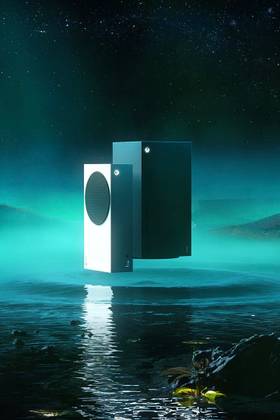
- Brand
-
Xbox
- Original Release Date
-
November 10, 2020
- Original MSRP (USD)
-
Series X priced at US$499 and the Series S priced at US$299
- Weight
-
9.8 lb