The Most Important Part of Jurassic Park and Jurassic World Is Sadly Impossible
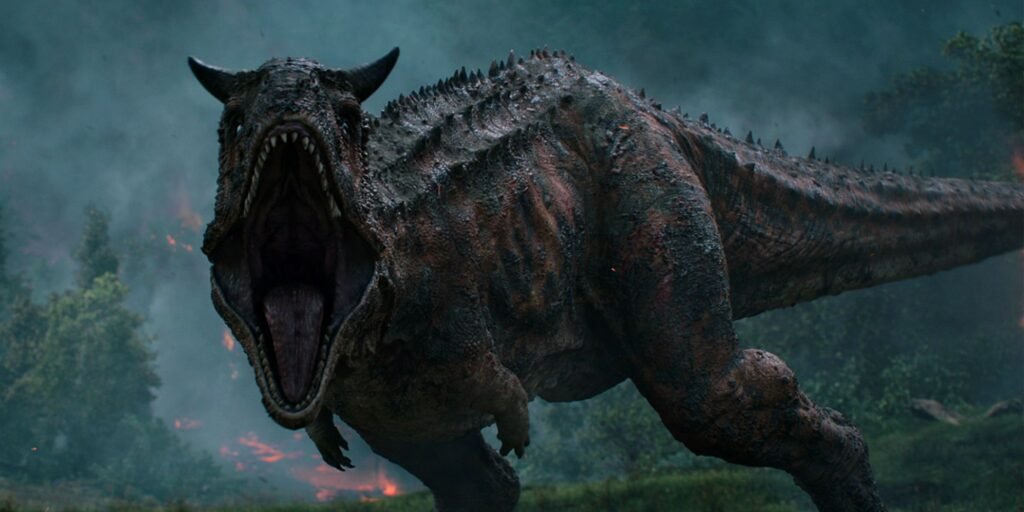
A new video from Colossal Biosciences reveals whether bringing dinosaurs back to life like in Jurassic World Rebirth could ever come close to happening. Rebirth is the seventh film in the Jurassic franchise, and a soft-launch reboot of Jurassic World. This time, the story chronicles the story of a group of scientists sent to extract dinosaur DNA in order to make medical advancements.
As in the case of the previous Jurassic movies, the film is predicated on the idea that once-extinct dinosaurs were brought back to life in the modern day. By the time Jurassic World Rebirth is set, these dinosaurs have been around for a while and, when approached, can be a significant danger.
The Colossal Biosciences video breaks down the viability of this de-extinction process and emphasizes one unfortunate conclusion: the de-extinction of dinosaurs is not possible. There is simply no viable dinosaur DNA in existence, despite the persistence of fossils.
Scientist Beth Shapiro explains that amber only exists in extremely hot environments, which actually speeds up the decay of DNA. The material is also porous, allowing for bacteria to enter and break down the DNA. The video also noted that dinosaurs were extinct for 66 million years, but ancient DNA extraction can only go back 1.2 million years.
What This Means For The Jurassic Park Movies
Dinosaurs Cannot Come Back To Life
In Jurassic Park, amber plays a critical role in the original extraction of dinosaur DNA. As per the Steven Spielberg movie’s lore, DNA remained in mosquitoes trapped in amber, which originally feasted on dinosaur blood. This allows the dinosaurs to be brought back to life.

Related
Steven Spielberg’s 7 Best Action Scenes, Ranked
Legendary director Steven Spielberg has established himself as a connoisseur of action-packed sequences, making audiences shake in anticipation.
Jurassic Park was not entirely off base in portraying the process of de-extinction. As the Colossal video acknowledges, it is somewhat possible to use de-extinction to “rebuild extinct species for the present.” Colossal themselves are working on reviving species like the direwolf, using old DNA samples.
“Just like the expedition in Jurassic World Rebirth, we at Colossal are on our own expedition—to rescue DNA, to revive species, and restore not just lives, but the planet.”
The amber is a decently believable sci-fi justification for this de-extinction method, allowing Jurassic Park and Jurassic World Rebirth to justify the foundation of their plot. As in the case of many genre films, however, the specifics fall apart when up against more in-depth scientific approaches.
Our Take On This Jurassic Park Franchise Explanation
The Franchise Is Still Highly Entertaining

“We don’t have a genetic testing lab on a secret island with the ethically corrosive capitalistic intent of creating flesh-eating dinosaurs,” the narrator explains when comparing the film franchise’s InGen scientists to the real-world Colossal Biosciences.
Colossal’s research is proof that science-fiction movies like Jurassic World Rebirth are best when one does not logic things out too thoroughly. Of course, it makes sense that DNA would downgrade in quality dramatically over time. But the average audience member does not think of the specifics on this as long as the spectacle is good enough.
While a real-life dinosaur amusement park is not happening any time soon, it is still fun to see this logic play out on the big screen. Given the impossibility of the main hook, it is most important that the Jurassic movies stay consistent with their own internal logic. Jurassic World Rebirth has set things on a good path by continuing to assert dinosaur DNA as tantamount.
Source: Colossal Biosciences