
Canada Wins The Race: Why Indian Students Are Turning Away From The US In 2025 | World News
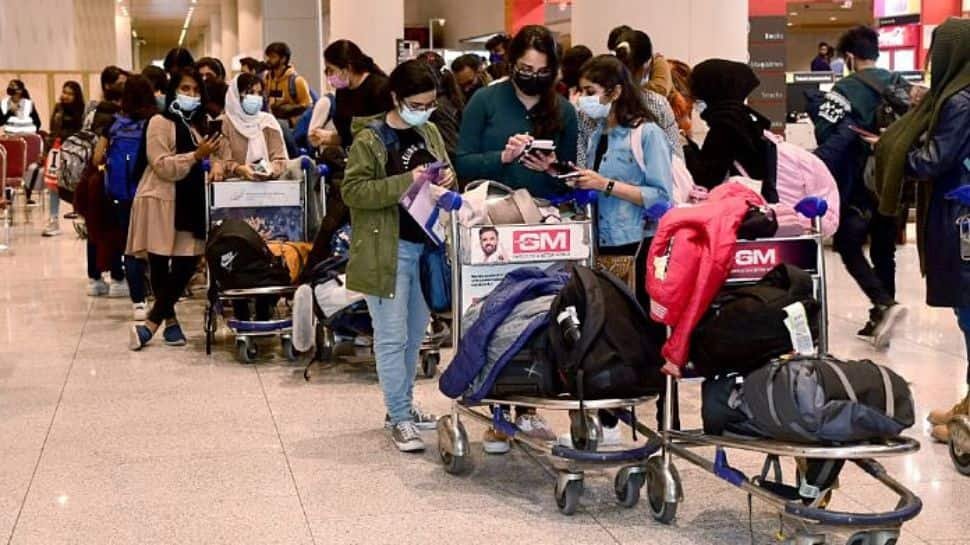
New Delhi: India’s students are recalibrating their global education plans. Rising costs, tougher visa rules and political uncertainties in the United States are prompting a growing number of families to look north. Long seen as a welcoming alternative, Canada is now emerging as the preferred destination for Indian students.
The trend is reflected in official figures. By the end of 2024, Canada hosted 427,000 Indian students, compared with 337,630 in the United States, according to the Ministry of External Affairs.
A 2025 survey by ApplyBoard shows that 94% of Indian study-abroad aspirants rank Canada as their top choice. Affordability, safety and immigration-friendly policies are cited as decisive factors.
At institutions such as the University of British Columbia, international student enrolments have risen by 27%, reflecting the turbulence south of the border.
Huron University in Ontario, for example, sees the shift as both opportunity and responsibility.
A Roller Coaster In Student Mobility
Dr. Barry Craig, president and vice-chancellor of Huron University, calls the past five years “nothing short of turbulent”.
“We began with COVID, which created so many obstacles to student mobility, almost a complete halt. As we emerged, momentum returned, but then geopolitical turbulence and diplomatic tensions caused another downturn in Canada. Now, we are seeing a re-emergence of interest, and I believe it is directly linked to the situation in the United States,” he said.
Huron’s enrolments reflect this volatility. Indian student numbers fell drastically after a 2024 diplomatic row, going from “dozens” in 2021 to just three last fall. Momentum is now returning.
“We are already receiving nearly three times as many enquiries and applications for this fall compared to the past two years. Our main recruitment season begins in September, and interest is at least doubling, if not tripling,” he said.
Affordability Edge
For many families, cost is the decisive factor.
“One of my daughters did her undergraduate degree in Canada, and the other in the United States. The tuition in Canada was about 25% of what we paid in the United States. For an international student, the cost at Huron is probably half of what it would be at a comparable American institution,” said Dr. Barry.
Canadian universities prioritise academics while avoiding inflated administrative or extracurricular expenses.
“We do not cut corners on academics, but we do not waste money on things that are not core to education. That is how we keep prices affordable while maintaining world-class standards,” he explained.
Work Pathways Beyond Graduation
Canada’s policies on employability offer a strong incentive.
“Canada is already attractive because we offer a three-year Post-Graduation Work Permit. At Huron, we go further. 100% of our students receive a paid internship while studying. As a result, 92% are employed within six months of graduation, and importantly, in the field of their choice,” he claimed.
Students enter the workforce with practical experience and connections to leading firms, avoiding the uncertainty many face abroad.
Safe, Welcoming Environment
Safety and social climate also shape decisions. “Growing up in Canada, I used to think it was boring – clean air, clean water, no wars and very little violence. Now I think, thank God it is so nice to be boring. Parents want to know: will my child be safe? Compared to many countries, Canada has very low crime and none of the gun violence of the United States,” Dr. Barry highlighted.
Campus culture reflects this welcoming atmosphere. “We believe in free speech and debate, but debate that is respectful. Canada is a very welcoming country for outsiders,” he said.
Attracting Talent, Building Partnerships
Canada is also drawing researchers. The University of Toronto recently recruited three top researchers from Ivy League institutions seeking freedom from political restrictions. Across Canada, university leaders are lobbying the government to capitalise on this opportunity.
The Huron University is building stronger ties with India through its India Advisory Committee, which includes leaders from business, diplomacy, policy and education. Its members include Paul Abraham (Hinduja Foundation), Renu Basu (IHCL), Ajay Bisaria (former Indian High Commissioner to Canada) and Dr. Barry Craig.
“They will advise us on engaging with India and reassure Indian parents and students that Huron is serious about opening real doors in corporate, entrepreneurial and public service careers,” Dr. Barry said.
He said Canada is open for Indian students. “Canada is open for business again, and we are actively welcoming Indian students. Our campus community has been immeasurably enriched by their presence. It is good for India, it is good for Canada and it is fantastic for our universities,” Dr. Barry said.