Why successful test of the Agni-5 missile is big boost for India’s defence
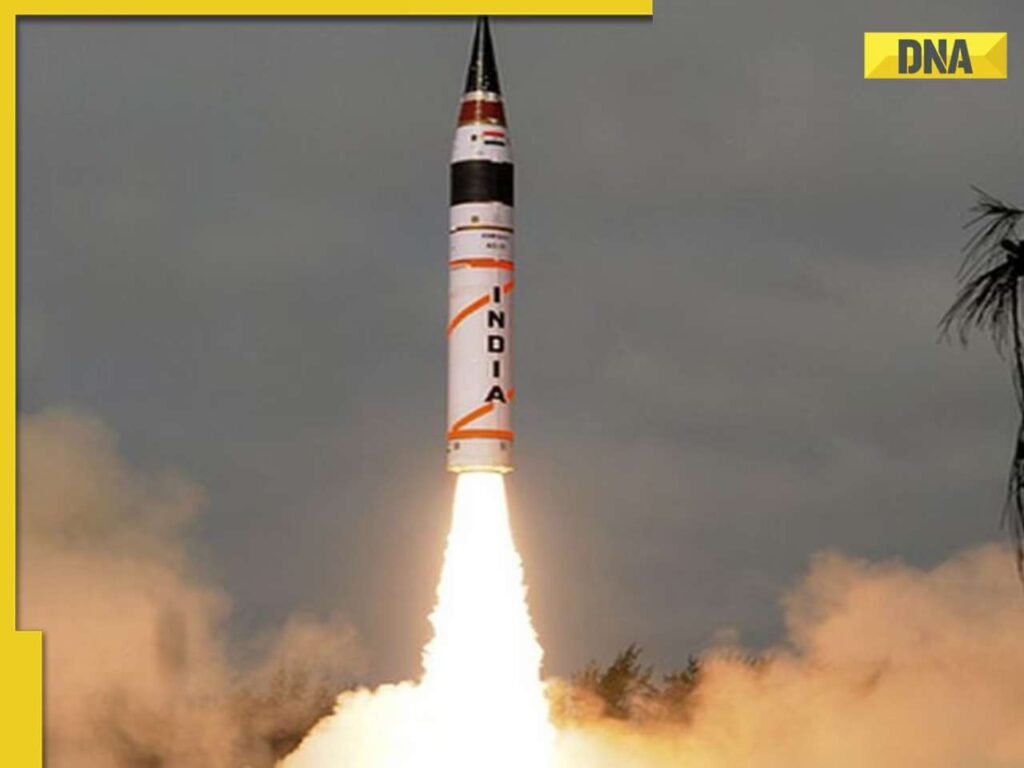
Agni-5 is an ICBM i.e. Intercontinental Ballistic Missile which is capable of carrying nuclear warheads.
India has successfully tested the Agni-5 missile. This test has been done at the Chandipur test range in Odisha. According to the Ministry of Defence, the Agni-5 missile has met all the prescribed criteria in this test. This is the 11th test of Agni-5 missile in the last 13 years. The missile was first tested in 2012, and last year, i.e. in 2024, Agni-5 was tested with MIRV capability.
After Operation Sindoor, all the parts of the Indian Army are constantly in action mode. The Indian Army is continuously practising in different areas. The Indian Air Force has also conducted a war exercise last month, and now the test of Agni-5 shows that India is constantly increasing its strategic capability. Why is the test of Agni-5 being considered so important?
Features of Agni-5 missile:
- Agni-5 is an ICBM i.e. Intercontinental Ballistic Missile, which is capable of carrying nuclear warheads.
- Up to 4,000 kilograms of warhead can be loaded on Agni-5.
- The range of this missile is said to be around 7,000 kilometers.
- Its speed is around 30,000 kilometers per hour i.e. around 24 times faster than the sound.
- Agni-5 is equipped with MIRV technology, i.e. once it reaches the target, 8 to 10 warheads can be released from this missile, which means that one missile can hit 8 to 10 targets.
This test of Agni-5 is a big success for DRDO and the Indian Army, but a question must be arising in the minds of the citizens of India that if Agni-5 was tested on 20 August, then what will happen on 21 and 22 August?
READ | Centre makes BIG announcement, over 12000 trains to be operated during Diwali, Chhath in this state; check details
India has issued a notice in the Indian Ocean for 21 and 22 August, in which the range of the test has been stated to be about four and a half thousand kilometers. Due to this, speculations are being made whether India is going to test any other long-range missile on 21 and 22 August after Agni-5.