
Top Director Warns of Declining Appeal

For decades, the Mobile Suit Gundam franchise has stood as one of anime’s most enduring legacies, shaping the mecha genre and influencing countless series. But one of its top directors, Kazuya Tsurumaki, believes the franchise’s future is in doubt. In a recent interview, the Gundam GQuuuuuuX director warned that the cultural appeal of piloted robots may no longer resonate with younger audiences.
Tsurumaki, best known for his work on Evangelion and FLCL, explained that Gundam’s survival could be at risk within the next decade, according to Yahoo! Japan. While older generations once viewed mecha as extensions of their real-world love for cars and motorcycles, today’s youth are growing up with different fantasies. This shift, he argues, may leave robot anime struggling to stay relevant in a changing entertainment landscape.
Why Robots May No Longer Resonate in Anime

When Gundam first debuted in 1979, piloting a giant machine represented both power and maturity. For kids raised during Japan’s postwar boom, robots mirrored their dreams of controlling vehicles like cars and bikes. Tsurumaki suggests that this sense of aspiration made mecha stories deeply relatable, offering a bridge between childhood wonder and adult capability.
But that cultural connection seems weaker today. Modern anime often gives its heroes psychic powers, magical abilities, or supernatural talents, which are skills that require no cockpit or machinery. For younger fans, the thrill of surpassing adults comes through innate gifts, not mechanical mastery. Tsurumaki believes this change explains why fewer kids today are drawn to robot anime compared to his generation.
Video games have also filled the gap once occupied by mecha fantasies. Instead of imagining themselves piloting a robot, kids can now embody powerful avatars directly with a controller. That immediacy makes the older fantasy of controlling machines feel outdated. As Tsurumaki points out, young fans may not even fully understand what piloting a robot is supposed to mean.
Gundam’s Future is at a Crossroads

Ironically, even as he questions its longevity, Tsurumaki has helped give Gundam a recent boost with GQuuuuuuX. The series, which reimagines events from the original 1979 anime, has sparked both praise and controversy. Longtime fans appreciate the bold risks, while newer viewers are discovering Gundam’s appeal for the first time. Bandai Namco reports that 2025 has been a record-setting year for the brand.
Still, the director remains realistic. Popularity today doesn’t guarantee survival tomorrow. Tsurumaki argues that robot anime must evolve in how it portrays machines, not as mere vehicles, but as something with renewed meaning for contemporary audiences. This echoes the creative philosophy he once brought to Evangelion, where the mecha served as metaphors for psychological and existential struggles.
Whether Gundam will reinvent itself again remains an open question. The franchise has already weathered generational shifts, from military drama to character-driven spinoffs like The Witch from Mercury. But Tsurumaki’s warning highlights the stakes: without a fundamental reimagining of why robots matter, even an institution as strong as Gundam could fade within the next decade.
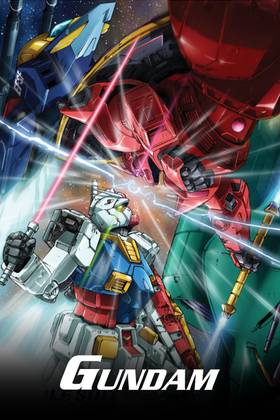
- Created by
-
Yoshiyuki Tomino
- First Episode Air Date
-
April 7, 1979
- Cast
-
Tôru Furuya, Shūichi Ikeda, Hirotaka Suzuoki
The Gundam franchise is a cornerstone of mecha anime, featuring giant robots known as “mobile suits” in various wartime settings. Originating with Mobile Suit Gundam in 1979, it explores complex themes of war, politics, and humanity through the struggles of pilots who navigate these massive machines. The franchise spans multiple timelines and universes, creating a rich tapestry of interconnected stories and standalone narratives.


