
Watch | Swollen Yamuna River breaches ‘danger mark’ of 205.33 mm; flood risk in low-lying areas of Delhi and Faridabad
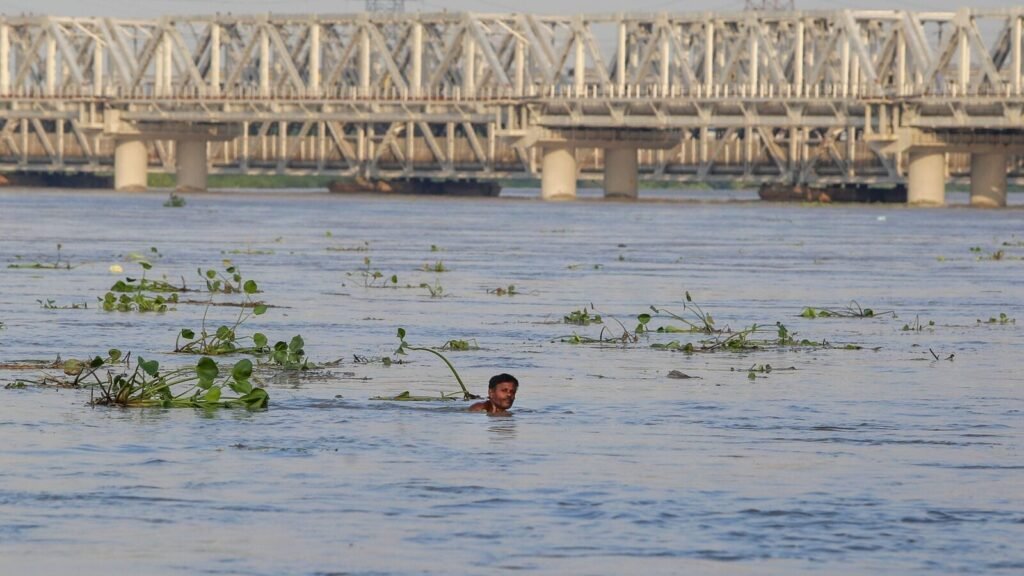
Yamuna river, the second-largest tributary river of the Ganges, is flowing above danger mark on August 19, Tuesday. This comes after all 18 gates of the Hathinikund Barrage in Haryana’s Yamunanagar were opened two days ago.
Visuals from Delhi’s Old Yamuna Bridge show the overflowing river. Amid possibility of flash floods, the State Disaster Response Force (SDRF), National Cadet Corps (NCC) and volunteers are on alert.
Dangerously rising water levels of the Yamuna river in Faridabad prompted district administration to take measures to prevent floods, PTI reported. According to the report, there were plans to release around 60,000 cusecs of water from the Okhla Barrage on August 18 night. Another one lakh cusecs of water from the Hathnikund Barrage was likely to be released on Monday night, Faridabad District Commissioner Vikram Singh said while convening a meeting with officials earlier in the day.
Mohana, Latipur, Manjhauli, several other villages and low-lying areas situated near the Yamuna river are most at risk.
Asserting that if in case there is any inundation it will be restricted to the floodplains, Delhi Chief Minister Rekha Gupta on Monday said that the national capital is in a safe zone and will not experience widespread flooding.
These remarks came after Yamuna in Delhi crossed the danger level mark. The river was flowing at a mark of 205.36 metres at 2:00 PM on August 18 at the Old Railway Bridge, which serves as a key observation point for tracking the river’s flow and potential flood risks, and is expected to rise up to 206 metres today.
By 6:00 PM on Monday the river was flowing at a mark of 205.55 metres. Notably, the danger mark is 205.33 metres while the warning mark for the river in the city is 204.50 metres.
Necessary preventive measures are in place including deployment of mobile pumps, residents at risk have been alerted and shifted to safer areas, Central Flood Control Room has been set up, waterlogging prone areas are being closely monitored and all relief and rescue equipment has been arranged, among others.