Tariffs, Tantrums And Ego: Ex-Diplomat Explains Why Trump Is Fuming At India | World News
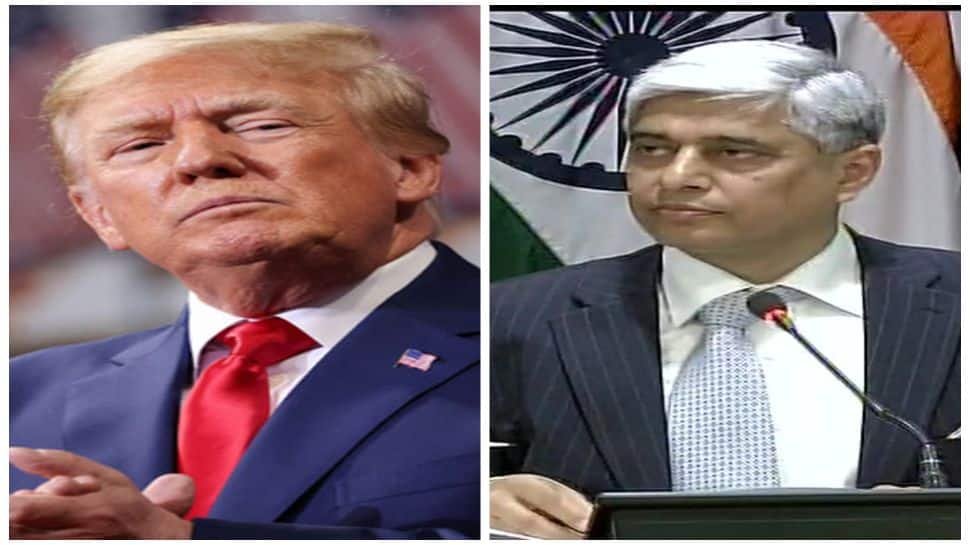
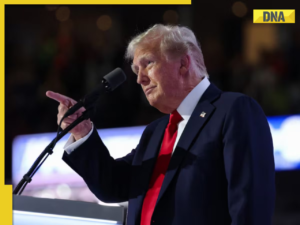
New Delhi: Former diplomat Vikas Swarup says punitive U.S. tariffs on India have a political trigger. He claims President Donald Trump is angry that New Delhi has not acknowledged his self-declared role in defusing tensions with Pakistan after May’s military flare-up.
A former High Commissioner to Canada and noted author, Swarup spoke to ANI about what he sees as the real reasons for the trade pressure. He says US-India ties remain strategic, while Washington’s current relationship with Pakistan is a short-term and tactical deal driven by money.
Trump’s Reasons
Swarup lists two main factors. One is India’s presence in BRICS, which Trump views as an anti-American grouping.
“We have to understand why these tariffs have been imposed… One, Trump is not happy with India because we are a member of BRICS… he has got this notion that BRICS is an anti-American alliance which is hell-bent on creating an alternative currency to the dollar… he feels that India should not be a member of the BRICS,” he said.
The second is India’s refusal to give Trump credit for a ceasefire between India and Pakistan after Operation Sindoor in May. New Delhi has always maintained that the truce was arranged directly between the militaries of both countries at Pakistan’s request.
Trump has said “almost 30 times” that he prevented a nuclear disaster in South Asia. “He is miffed that India has not acknowledged his role; whereas, Pakistan has not only acknowledged his role but has even nominated him for a Nobel Peace Prize,” Swarup said.
Operation Sindoor Context
Operation Sindoor was India’s answer to the April Pahalgam terror attack that killed 26 civilians. Indian forces struck nine terror hubs in Pakistan and Pakistan-occupied Kashmir. Over 100 terrorists were killed. Pakistani military and civilian areas were avoided.
Swarup says the United States is using tariffs as leverage to push its demands on agriculture, dairy and GM crops. “This is part of his pressure tactics to get India to sign on the dotted line on the maximalist demands that the United States is making… We have not caved in,” he said.
Trump and the Nobel Ambition
Swarup describes Trump as a dealmaker who sees himself as a peacemaker. “Look at the number of conflict situations that he has mediated in… He feels that the biggest one of these was the India and Pakistan one because these two are nuclear powers,” he said.
Trump wants to match and surpass Barack Obama, the only U.S. president to win the Nobel Peace Prize while in office. “He has made no secret of his longing for that Nobel Peace Prize. He is hoping that if he could not get it for these, if he is able to bring about a ceasefire between Russia and Ukraine, then that might be his ticket,” Swarup said.
Pakistan’s US Access
Swarup says India is not responsible for Washington’s recent lean toward Islamabad. He credits Pakistani lobbying and strategic messaging. “Pakistan, through some intermediaries, has gotten the ear of the U.S. president,” he said.
He points to two visits by Pakistan Army Chief Asim Munir to Washington and a deal over Pakistan’s “oil reserves”. He also highlights Pakistan’s push to become a regional crypto hub. In April, a Trump-backed cryptocurrency venture signed a letter of intent with Pakistan’s crypto council.
“All these things have led to Trump having a softer approach towards Pakistan,” Swarup said.
Short-Term Tilt
Swarup calls the U.S.-Pakistan relationship temporary and transactional. He says the U.S.-India partnership is deeper. “I call it a storm, not a rupture. You just have to wait out the storms. All storms eventually pass,” he said.
He warns that U.S. alignment with Pakistan also means closer alignment with China, Washington’s key competitor.
Tariff Politics
Trump has called India a “Tariff King”, but Swarup says the United States now holds that title. “Our average tariff is about 15.98 percent. The U.S. tariff today is 18.4 percent… tariffs are bringing in money… But the issue is that eventually, who will pay for these tariffs? American consumers,” he said.
He warns higher costs will fuel U.S. inflation.
He defends India’s refusal to give in. “India is too large, too proud a country to become a camp follower of any other country. Our strategic autonomy has been the bedrock of our foreign policy right from the 1950s,” he says.
Indus Waters Tensions
Swarup also highlights Pakistan’s reaction to India’s suspension of the Indus Waters Treaty. He says Islamabad is heavily dependent on those rivers and uses nuclear threats to attract global attention.
“They are deliberately provoking nuclear blackmail,” he tells ANI.