Centre asks Haryana, HP, Punjab & Jharkhand to rationalise excise duties on ethanol
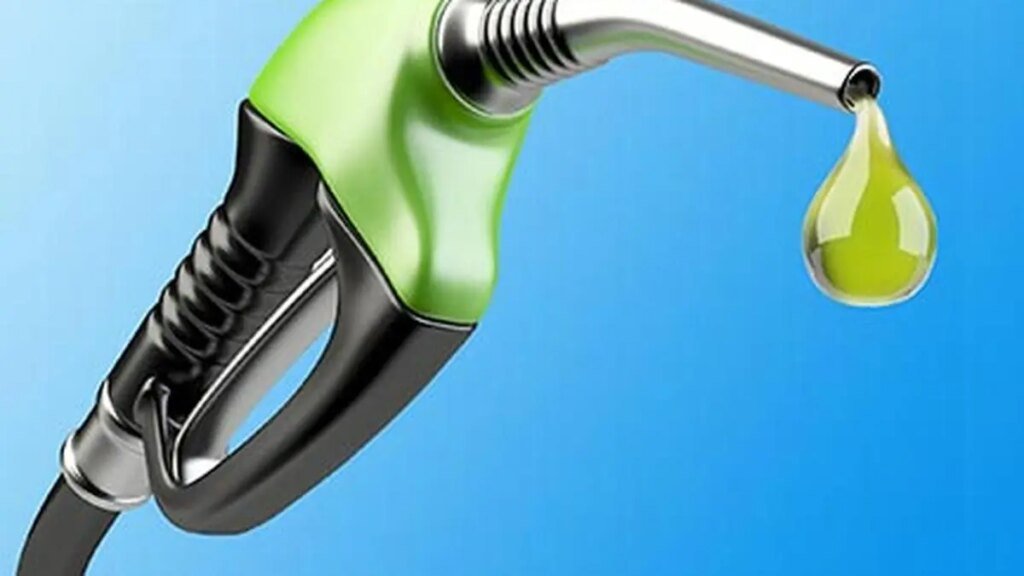
The Oil Ministry has urged the State governments of Haryana, Himachal Pradesh, Punjab and Jharkhand to rationalise excise levies and duties as well as to have a supportive regulatory framework to boost ethanol production, storage and movement within and across States.
Minister of State for Petroleum and Natural Gas Suresh Gopi told Rajya Sabha on Monday that Centre has taken “cognisance” of recent policy changes on denatured ethanol by certain State governments, particularly on levies such as renewal fees, license fees, storage fees, capacity enhancement fees, import/ export duties etc.
For instance, Haryana levies ₹1 per bulk litre (BL) for ethanol blending in petrol, ₹1.2 per BL on import of ethanol and a substantial increase in annual renewal fee, licence grant fee, etc.
Similarly, Himachal Pradesh levies ₹1 per litre on ethanol consumption beyond 300 kilo litres annually, and a substantial increase in annual renewal fee, licence grant fee, and capacity enhancement fee, etc.
Punjab levies an ethanol regulatory fee of ₹1 per BL, and a substantial increase in annual renewal fee, licence grant fee, and capacity enhancement fee, among others. Jharkhand in its draft Excise Policy has proposed import/ export fee, transportation fee, ethanol storage license fee, etc.
The Minister informed the upper house that Uttar Pradesh levies export fees of ₹1 per BL on denatured alcohol.
“Accordingly, Ministry of Petroleum and Natural Gas (MoPNG) has taken up the matter with the concerned State governments requesting for reconsideration of such levies/ duties in light of the national ethanol blending programme and the fact that ethanol is covered under Goods and Services Tax (GST),” he said in a written response to a query.
National Policy on Biofuels
The National Policy on Biofuels lays out the roles and responsibilities of all the stakeholders including Ministries, Departments and States with respect to biofuels to synergise efforts.
It also provides an institutional mechanism for overall coordination, effective end-to-end implementation and monitoring of biofuel programmes.
Additionally, NITI Aayog has also started the ASSET (Accelerating Sustainable State Energy Transition platform).
Launched in collaboration with the Ministry of New and Renewable Energy and Ministry of Power, the platform aims to co-creates clean energy transition blueprint and implementation roadmaps, focussing on emerging technologies, circular economy principles and sectoral decarbonisation strategies at the State level.
The National Policy on Biofuels, after being amended in 2022, advanced the target of 20 per cent blending of Ethanol in petrol from 2030 to Ethanol Supply Year 2025-26 (November 2025 to October, 2026).
PSU Oil Marketing Companies (OMCs) achieved the target of 10 per cent ethanol blending in petrol in June 2022 — five months ahead of the target during ESY 2021-22.
India achieved a blending of 12.06 per cent in ESY 2022-23 and 14.60 per cent in ESY 2023-24. Further, for the ongoing ESY 2024-25, the blending percentage has gone up to 19.05 per cent as on July 31, 2025. During July 2025, ethanol blending of 19.93 per cent was achieved.
In order to ensure availability of feedstock for ethanol production to achieve 20 per cent ethanol blending target by October 2026, the government approved allocation of 52 lakh tonnes (lt) of surplus Food Corporation of India (FCI) rice for ethanol production, each for the ESY 2024-25 and ESY 2025-26 (up to June 30, 2026) and diversion of 40 LT of sugar for ethanol production in ESY 2024-25.
Published on August 12, 2025